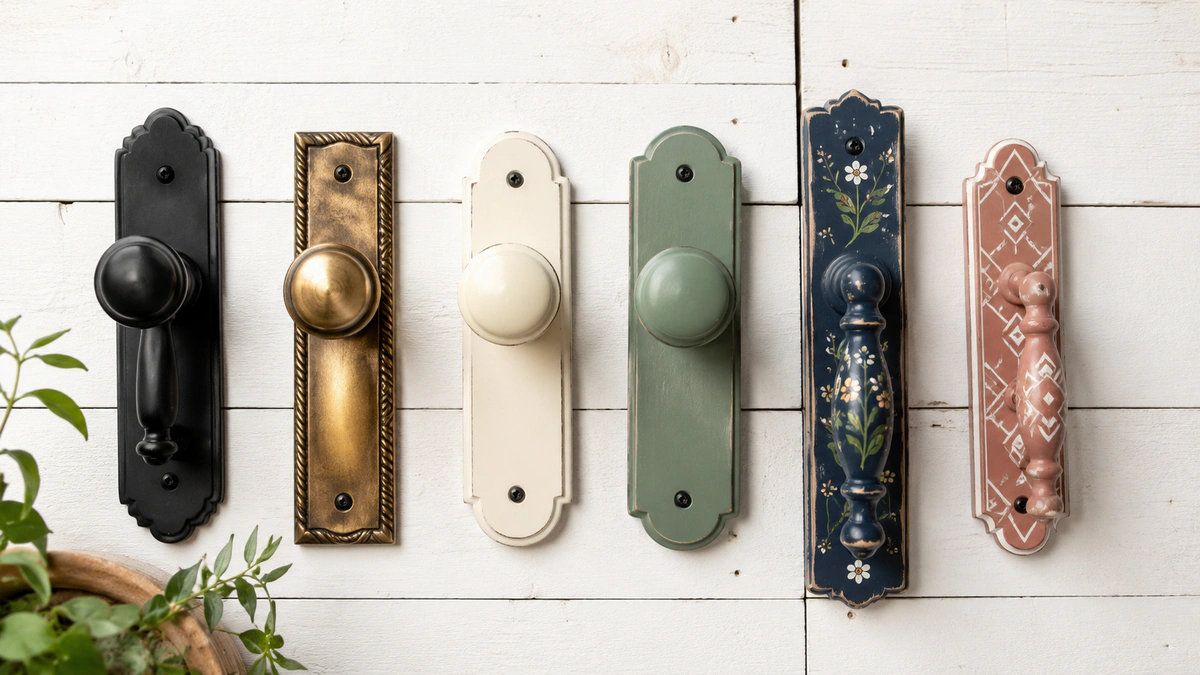
Painted door handles can turn plain door hardware into a small design feature without replacing every latch, hinge, or lock in your home. This guide keeps the style ideas from the original article but adds the preparation, spray paint, and durability advice that painted hardware needs.
Use painted door handles when you want a budget-friendly DIY project with visible impact, especially when existing door hardware still works well. The best results come from choosing the right finish, cleaning the handle well, and using hardware colors that support your room rather than fighting it.
Quick Answer
The best way to upgrade painted handles is to remove the hardware, clean and sand the surface, apply metal primer, use several light coats of paint, and seal the finish with a clear coat. Matte black, aged brass, soft white, muted sage, and patterned accent colors all work well when they match the door, hinges, and room style.
Start With Prep Before You Pick a Color
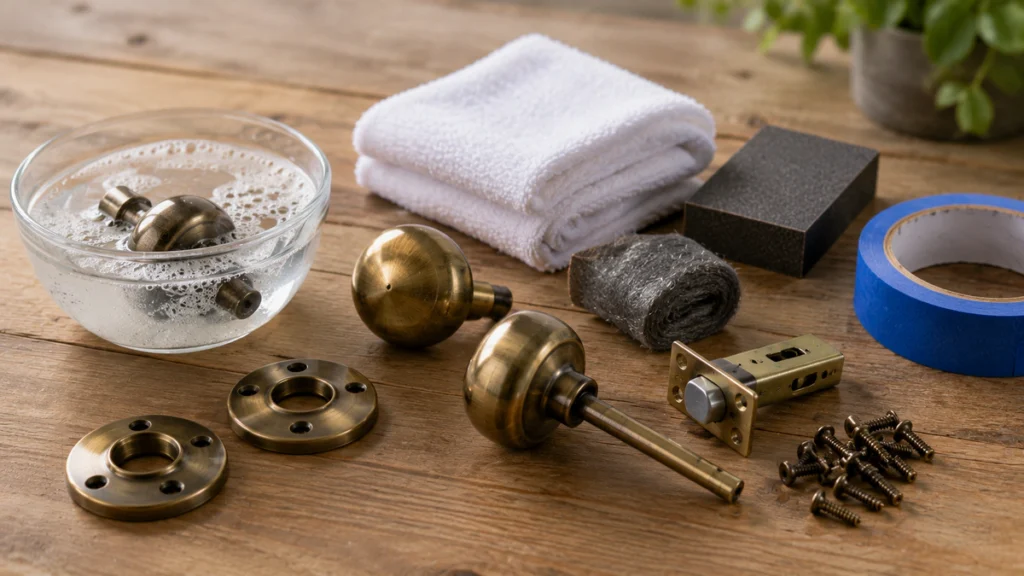
Painted door handles look simple, but the finish only lasts if the surface is ready. Oils from hands, old polish, dust, and glossy factory coatings can stop paint adhesion, especially on brass handles, nickel finish hardware, and stainless steel handles.
Good prep work matters more than the color you choose. Remove the door hardware if you can, label the screws with a piece of painter’s tape, and take a quick photo so the latch and hinge positions are easy to rebuild later.
- Wash the handle with dish soap or a degreaser.
- Scuff the surface with fine sandpaper or steel wool.
- Wipe away dust with a clean cloth.
- Use a primer made for metal before the paint.
- Let each coat dry before touching the underside of the handle.
If your home was built before 1978 and you are sanding old painted doors or trim nearby, read the EPA lead-safe renovation guidance before you disturb any painted surface. Door edges and friction areas can create dust, so safety comes first.
Choose a Finish That Fits the Room
The easiest way to choose a painted handle finish is to look at the room’s permanent finishes first. Floors, trim, cabinets, faucets, and lighting should guide your color choice.
For more stylish home ideas, HouseFery’s home design inspiration can help you compare painted hardware with larger room updates before you commit. A style-led source such as House & Garden’s interior design ideas can also help you spot color combinations that feel current rather than random.
Painted handles should feel intentional, not like leftover paint from another project. Match the finish to the mood of the room and repeat the color at least once nearby, such as in a frame, lamp, vase, cabinet pull, or painted table.
| Finish Idea | Best Room Fit | Durability Tip |
|---|---|---|
| Matte black | Modern bedrooms, hallways, and white doors | Use a clear coat to reduce fingerprints and wear |
| Aged brass | Traditional rooms, warm wood, and cream trim | Use metallic paint over primer, not straight onto brass |
| Soft white | Cottage rooms, nurseries, and painted panel doors | Avoid on heavy-use exterior door hardware |
| Sage green | Calm bedrooms, entry door areas, and natural palettes | Pair with satin or eggshell sheen for easier cleaning |
| Patterned accent | Vintage, boho, or creative rooms | Keep the pattern away from high-friction latch edges |
Try Matte Black for a Clean Modern Look
Matte black handles are a safe choice when you want an update that works with most interiors. They look sharp on white, gray, oak, and painted interior door styles, and they make old hardware feel more deliberate.
This is the best finish when the room already has black accents. Use it with black picture frames, dark cabinet pulls, or a black stair rail so the handle does not look isolated.
For a stronger paint job, paint the handle in thin coats rather than one thick coat. Thick paint can pool near the latch, chip around screw holes, and leave fingerprints before the paint dries fully.
Use Aged Brass When You Want Warmth
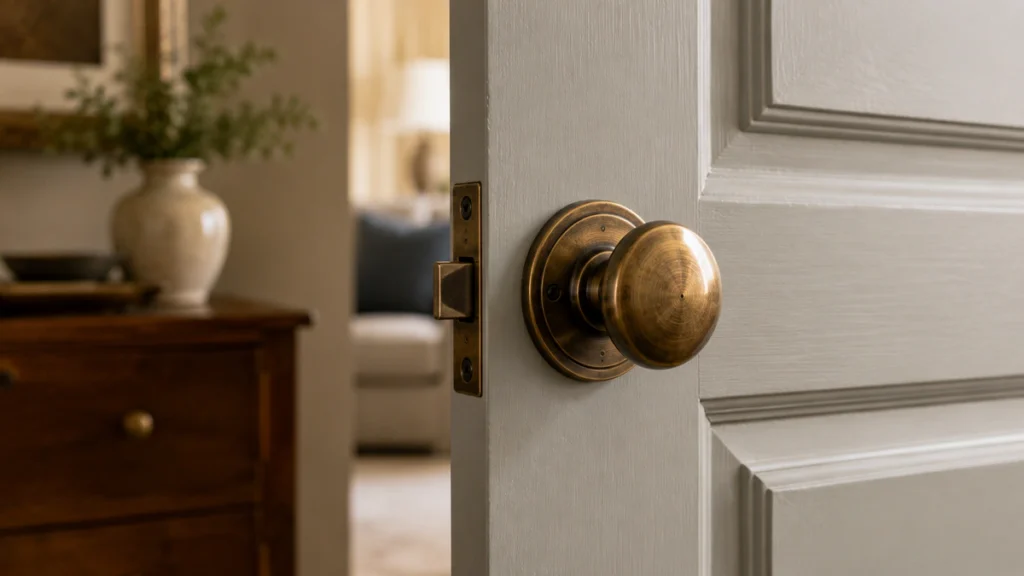
Aged brass is useful when shiny brass door handles feel dated but the room still needs warmth. Instead of replacing brass hardware with new hardware, a careful metallic paint can tone down the yellow shine and give the handle a softer antique look.
Do not skip primer on brass. Brass door handles are smooth, so primer and light sanding help ensure your paint sticks. If the handle is very polished, scuff it gently and wipe it clean before applying primer, spray paint, and clear coat.
Oil rubbed bronze spray paint can also work in traditional rooms, but test the color first. Some bronze products look nearly black indoors, while others have a red or copper undertone that may clash with cool gray doors.
Add Color With Soft Neutrals or Muted Greens
Not every painted door handles project needs to make a loud statement. Soft white, putty, taupe, dusty blue, and muted green can brighten a door without making the hardware the loudest part of the room.
Muted colors work best when the door itself is simple. A sage handle on a white door can feel calm and fresh, while the same color on a busy paneled door may disappear.
If you enjoy color projects, coordinate the handle with other small painted pieces. A room with colorful painted table designs can support a similar accent on door hardware because the eye already expects a crafted detail.
Use Patterns Carefully on Low-Touch Handles
The original article’s patterned handle idea is worth keeping, especially for creative rooms, guest bedrooms, studio doors, and vintage spaces. Small florals, stripes, dots, and folk-inspired designs can make painted handles feel personal.
Patterns are better on low-touch handles than on busy entry doors. A bedroom closet handle can keep a hand-painted motif longer than exterior door hardware used dozens of times a day.
Use a fine brush for details after the base coat cures. If you want crisp lines, mask the surrounding area and remove the tape while the paint is still slightly soft. Add clear coat only after the pattern is dry.
Know When Not to Paint Door Handles
There are times when painting hardware is not the best choice. If the mechanism is loose, the latch sticks, the lock is unreliable, or the finish is deeply pitted, replacement may be smarter than paint.
Paint improves appearance, not mechanical function. If the handle rubs against the rosette, binds when turned, or has peeling chrome, a fresh coat of paint may fail quickly. Fix the hardware first or install new door handles.
Avoid painting keyholes, moving latch parts, strike plates that rub constantly, or the inside of lock mechanisms. Paint build-up in those areas can stop the door from closing cleanly.
Make the Finish Last Longer
Durability is the difference between a useful home improvement and a weekend project that chips in a month. Painted handles need enough curing time before regular use.
If you have also refreshed the surrounding walls, check how long after painting you can hang pictures before frames, mirrors, or wall decor go back near newly painted handles.
Let the final coat cure longer than the can says if the handle gets daily use. Paint may feel dry in an hour but still be soft under the surface. If possible, wait 24 to 48 hours before reinstalling and use the handle gently for the first week.
- Use primer and paint designed for metal.
- Apply two or three light coats of paint.
- Add a compatible clear coat for high-touch areas.
- Tighten screws without scraping the fresh finish.
- Clean with a soft cloth instead of abrasive pads.
For exterior door hardware, choose paint rated for outdoor use. Sun, rain, and temperature changes are harder on painted door knobs than an interior bedroom handle.
Frequently Asked Questions
Can You Paint Door Handles?
Yes, you can paint door handles if you clean, sand, prime, and use the right paint for metal. The finish lasts longer when the handle is removed before painting.
Is Spray Paint Better Than Brush Paint?
Aerosol paint usually gives a smoother finish on curved hardware. Brush paint can work for patterns, but it may leave visible marks on the main grip.
Should Door Knobs Match Hinges?
They do not have to match perfectly, but they should coordinate. Matte black handles with bright brass hinges can look unfinished unless another finish ties them together.
How Long Do Painted Door Handles Last?
With good prep, primer, light coats of spray paint, and clear coat, painted door handles can last for years on low-traffic interior doors. Heavy-use exterior handles may need touch-ups sooner.
Can You Paint Door Handles Without Removing Them?
You can, but it is not ideal. Removing the handle gives cleaner edges, less overspray, and better coverage around the underside of the handle.
Final Thoughts
Stylish painted door handles are a practical way to refresh old hardware, but the best results depend on preparation as much as color. Clean the handle, sand the surface, use primer, build thin coats of paint, and choose a finish that works with your room.
If you want a small DIY project that feels custom, painted handles are worth trying before you buy new hardware. With smart prep, the right hardware finish, and careful spray-paint technique, the upgrade can look polished and last through daily use.