Garden art ideas work best when they make your outdoor space easier to read, not just more decorated. These garden art ideas can be simple, but they need a clear role. A sculpture, sign, fountain, mosaic, or planter can give the eye a place to land and help your garden design feel intentional.
If your yard feels plain, start with one strong focal point, then build around it with outdoor sculpture, lighting, plants, and color. The right garden decor can make a patio, walkway, small backyard, or flower garden feel like an outdoor room.
Quick Answer
The best garden art ideas are pieces that add a clear focal point, fit the scale of your outdoor space, and make the garden easier to enjoy. Good options include outdoor sculpture, mosaic stepping stones, decorative planters, a small fountain, personalized signs, birdhouses, wall art, and upcycled yard art. Choose weather-safe materials, repeat one or two colors from your planting, and place each piece where it supports the view instead of cluttering it.
Start With A Clear Visual Theme
The phrase “art posts” can be confusing because most people search for garden art ideas, garden decor, or yard art. Think of this article as a visual guide to art you can place, hang, paint, plant around, or build into the landscape.
Before buying anything, choose a simple theme. You might want a calm cottage garden, a rustic courtyard, a playful fairy garden, or a modern space with clean lines. Looking at House & Garden design inspiration can help you notice how color, texture, and proportion work together before you choose your own pieces.
A theme also helps every accent feel connected. For more practical home and garden ideas, HouseFery home decor and garden ideas can give you a useful starting point for matching outdoor details with the rest of your home.
Use Sculpture As The Main Focal Point
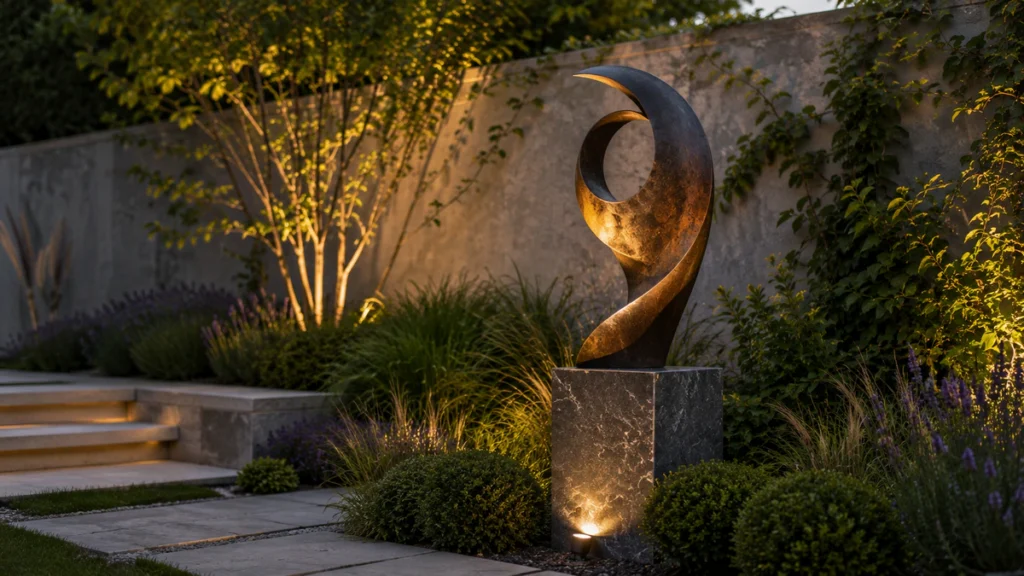
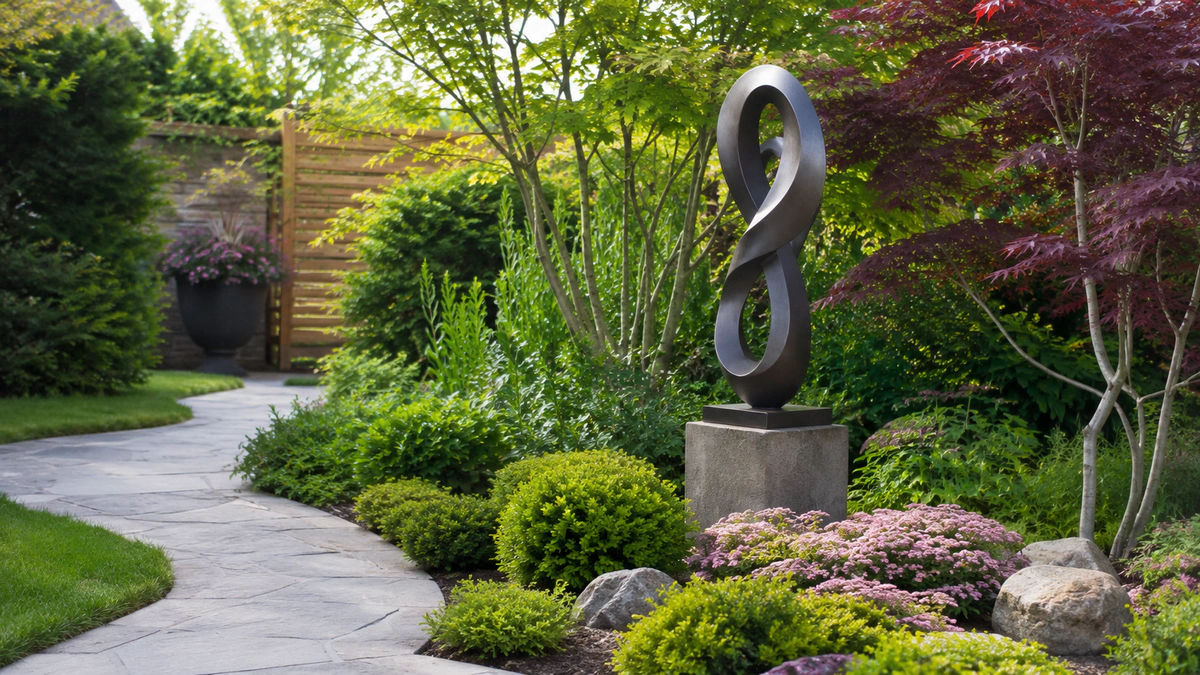
Outdoor sculpture is the simplest way to make a plain corner feel designed. It can be a metal bird, a stone figure, a ceramic sphere, a wood carving, or a tall plant stand used like an art pedestal.
Place sculpture where it can be seen from a path, patio, window, or seating area. That turns it into a garden feature rather than a random ornament. A single eye-catching piece near a walkway usually feels stronger than five small objects scattered across the lawn.
Scale matters. A small garden needs one neat sculpture or compact birdbath. A larger landscape can handle different heights, such as a tall metal piece behind a low planter or a fountain framed by shrubs.
Compare Garden Art Options Before You Buy
Use the table below to match each garden project with the effect you want. This keeps the choice visual and practical instead of vague.
| Garden Art Idea | Best Place To Use It | Visual Effect | Maintenance Tip |
|---|---|---|---|
| Outdoor sculpture | Path end, patio edge, or planting bed | Creates a focal point | Choose stone, metal, or sealed wood |
| Mosaic stepping stones | Walkway or small backyard path | Adds color and rhythm | Use frost-safe grout outdoors |
| Personalized sign | Gate, shed, herb garden, or seating area | Adds personality to your garden | Pick treated wood, metal, or acrylic |
| Fountain or birdbath | Near seating or a flower garden | Adds sound and movement | Clean water and pump parts often |
| Upcycled planter | Wall, ledge, steps, or patio corner | Gives reused items new life | Drill drainage holes before planting |
Add Personality With Signs, Mosaics, And Courtyard Details
Some garden accents work because they tell visitors what the space is for. A sign can mark an herb garden, welcome guests at a gate, or add humor near a shed. If you want a more finished look, compare personalized garden signs for outdoor styling before choosing a material, size, or message.
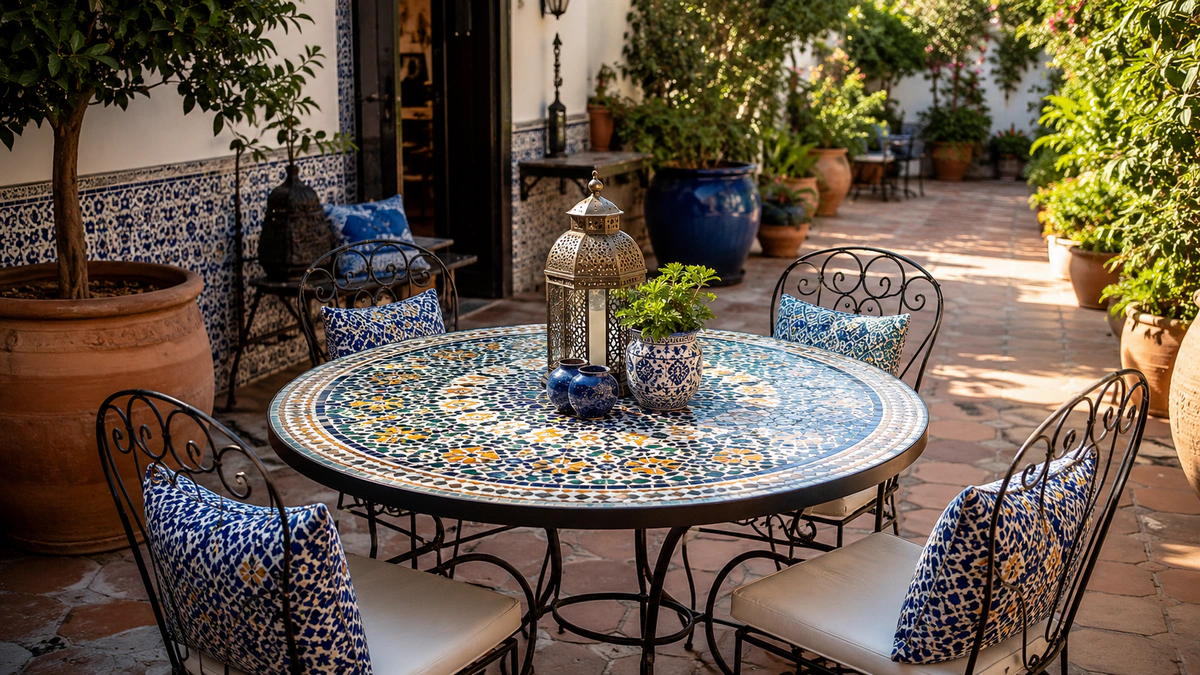
Mosaic pieces add color without needing more blooms. A mosaic pot, stepping stone, tabletop, or wall tile can repeat the colors of nearby flowers. For a richer courtyard look, these Moroccan mosaic table ideas for courtyard color show how pattern and outdoor furniture can make a seating area feel warmer.
Keep signs and mosaics close to places where people pause. They work best near a bench, door, patio, garden gate, or narrow walkway where the detail can actually be seen.
Blend Art With Plants And Wildlife
Garden art should not fight the planting. It should make the plants look better. A birdbath beside ferns, a feeder near a shrub, or birdhouses tucked into tree branches can add movement while still supporting the natural mood of the garden.
The RHS Wellbeing Garden Blueprint explains that garden design can support mood, comfort, and connection with nature, especially when spaces include plants, seating, sensory details, and easy access. Use that idea when you place art: the piece should help you stop, look, listen, or sit for a moment.
This is why outdoor sculpture should feel touchable, visible, and calm rather than hidden behind clutter. When garden design supports comfort, art becomes part of daily use instead of a decoration you forget after the first week.
For a softer look, surround a hard object with foliage. Put moss around a stone ornament, succulents around a shallow pot, or colorful flowers near a metal sculpture. The contrast between living plants and fixed art creates visual interest.
Try DIY And Upcycled Yard Art
DIY garden art can be fun and easy when you start with weather-safe items. Old watering cans, thrift-store frames, broken tiles, unused pots, and even a bowling ball can become unique yard art with paint, stain, or mosaic work.
Use this simple step-by-step filter before starting a creative DIY project:
- Pick one object that already has a strong shape.
- Check that it can handle rain, sun, and wind.
- Seal wood, paint, or porous clay before placing it outside.
- Repeat a color from nearby blooms or furniture.
- Place it where it solves a blank spot, not where it blocks a path.
The best DIY projects look deliberate because they repeat colors already in the garden. A blue pot near blue flowers, a copper dragonfly garden art piece near warm brick, or a stained wooden sign beside a rustic gate will feel planned.
These DIY garden projects can also suit kids and adults when the work is simple and safe. Repurpose a cracked pot as a succulent planter, turn watering cans into seasonal accents, or use upcycling to make a unique garden marker. A confident gardener can elevate a backyard garden with small details, while new DIYers can start with one creative garden idea that adds whimsy without creating clutter.
Use Wall Art, Vertical Pieces, And Small-Space Details
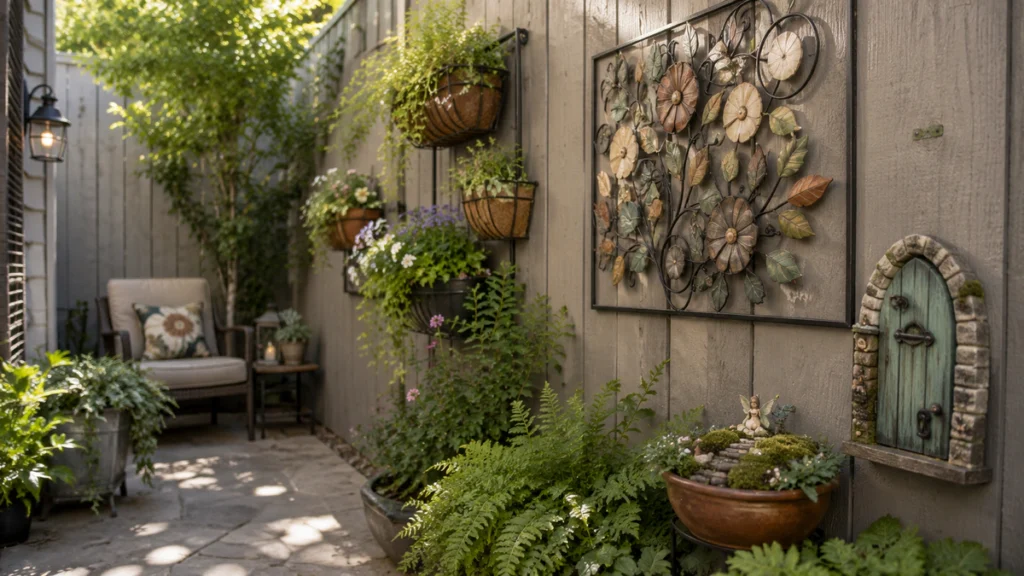
A small space needs vertical garden art more than extra objects on the ground. Use a fence, shed wall, balcony rail, or blank exterior wall as your art gallery. Hang a wreath, framed outdoor panel, planter rack, or vertical herb garden to lift the eye without taking up floor space.
Wall art also works in narrow side yards. A painted panel, mirror made for outdoor use, or row of birdhouses can make a tight walkway feel more inviting. Keep the path clear and let the wall carry the decoration.
If you like softer storytelling, a whimsical fairy door, a small moss bowl, or a painted bloom on a fence panel can create garden ambiance without taking over the space.
If you have a small backyard, choose one feature per view. For example, use a wall planter behind a chair, a compact fountain beside the steps, or one sculptural pot on a ledge. Too many small items can make the area feel busy.
Place Lighting Where It Adds Movement
Lighting can turn simple garden decor into evening art. A small spotlight under a sculpture, solar lights near mosaic stepping stones, or string lights around a pergola can add movement after sunset.
Do not light everything. Pick one path, one plant group, and one art piece. That gives the outdoor space depth without making it look like a display window.
Soft lighting is especially useful around water. A fountain or birdbath feels more peaceful when the surface catches a little light. It also helps visitors understand the shape of the garden after dark.
Frequently Asked Questions
What Is The Best Garden Art For Beginners?
Start with one sculpture, birdbath, or large planter. These pieces are easy to place, easy to move, and strong enough to change the look of a garden without a full redesign.
How Do You Choose Garden Art That Does Not Look Cluttered?
Choose one main focal point for each view. Repeat one color, material, or shape, then leave enough open space around the piece so it can breathe.
Can DIY Garden Art Last Outside?
Yes, if you use weather-safe materials and seal them properly. Exterior paint, outdoor stain, drainage holes, rust-resistant metal, and frost-safe grout all help DIY pieces last longer.
Where Should I Put A Garden Sculpture?
Place it at the end of a path, near a patio, in a planting bed, or where it can be seen from a window. Avoid hiding it behind tall shrubs unless you want a surprise view.
What Garden Art Works In A Small Garden?
Small gardens work well with wall art, compact fountains, vertical planters, birdhouses, and one strong pot or sculpture. Use height instead of adding too many floor pieces.
Final Thoughts
Garden art works when it gives your yard a clear point of view. Choose pieces that match your plants, your paths, and the way you use the space. If you are starting from scratch, begin with one focal point, repeat one color, and add only the details that make the garden feel more personal. Good garden design keeps each choice useful.
The strongest garden art ideas are not random decorations. They are visual decisions that help outdoor sculpture, thoughtful garden design, and your outdoor space feel connected, useful, and worth spending time in.