A melon plant sounds ambitious in a cool UK garden, but it can work when you treat warmth as the main crop. The trick is to grow for steady heat, clean airflow, and fruit support rather than hoping for a perfect sunny spell.
This cantaloupe plant guide shows how to grow cantaloupe and covers melon growing in UK spaces, from greenhouse melons to container care. It also explains the simple checks I use for soil, watering, flower setting, and fruit support without making the job feel fussy.
This cantaloupe plant setup also keeps the advice focused on practical UK garden care.
Where to start
To grow a melon plant in a UK garden, start seeds warm indoors, transplant the seedling into rich compost after frost risk has passed, and keep it in the sunniest sheltered spot you have. A covered structure gives the best results, but a warm patio pot can work. Water steadily, feed when flowers form, hand pollinate if bees are scarce, support the fruit, and pick when the melon smells sweet and parts cleanly from the stem.
Why Warmth Matters for UK Melons
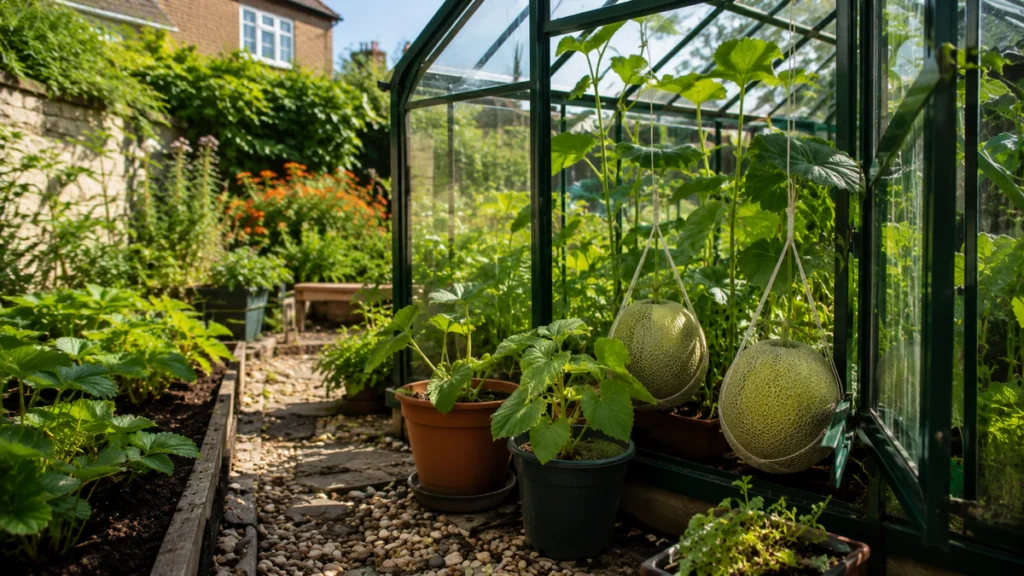
Melons are tender, so cold soil slows them down before the plant has a fair chance. Warm roots matter as much as warm leaves. Use a greenhouse, cloches, a sunny wall, or black mulch to trap heat around the growing area.
The original article linked to Italian-inspired backyard vegetable garden planning, which fits this point well: a productive plot starts with layout, sun, and practical growing space. For broader home and garden ideas, HouseFery also has easy home and garden improvement guides.
Good shelter also keeps leaves drier. That lowers the chance of powdery mildew and makes greenhouse melons easier to manage in a short UK growing season.
Choose a Short-Season Variety to Grow Melon Plants
Variety choice decides how forgiving the project feels when you grow melon plants in a cooler garden. Look for packets that mention early cropping, small fruit, short-season growing, or greenhouse use.
A small melon bred for quicker ripening suits UK gardens better than a large heat-loving type. Honeydew melons, canary melons, and watermelon need similar warmth, but this type usually gives a clearer beginner route when space is limited.
For strong germination, buy from a garden centre or seed supplier that lists days to maturity and growing conditions. Avoid vague packets with no climate notes.
Sow Seeds Warm and Move Them Carefully
Sow melon seeds in small pots of seed compost on a warm windowsill or in a propagator. One seed per pot is enough because the roots dislike being disturbed.
Keep the mix moist, not soaked. When true leaves appear, give each seedling more light and steady warmth. If you grow from seed in a cool room, the plant may stretch and stall.
Plant melon seedlings into their final growing positions only when nights are mild and the site is already warm. A growing bag, deep pot, raised bed, greenhouse border, or polytunnel bed can all work if drainage is good.
Prepare Rich Compost and a Deep Pot
A hungry melon vine needs growing mix that holds moisture without turning heavy. Mix peat-free multi-purpose growing medium with well-rotted manure or garden compost for a stronger root zone.
For containers, choose a pot of at least 30 litres. Bigger is easier because it dries out less fast. Add a support frame before the vine gets long, as late staking can damage roots.
It is possible to grow melon outside in the UK in a sheltered heat trap, but growing under cover gives you more control. If the plant must sit outdoors, use covers early and remove them once flowers need insects.
Water and Feed Without Splitting the Fruit
Melon plants hate extremes. Dry growing mix followed by a heavy soak can cause stress and may split fruit. Aim for even moisture, especially once fruit starts swelling.
Water at soil level in the morning. Keep leaves as dry as you can. Start with a balanced fertiliser or fertilizer label with moderate nitrogen, then switch to a high-potassium tomato feed when flowers and small fruit appear.
The RHS guide to grow melon crops at home gives useful detail on sowing, plant care, and harvesting. It is a reliable source when you want deeper checks beyond a quick garden plan.
Train the Vine and Support Each Melon
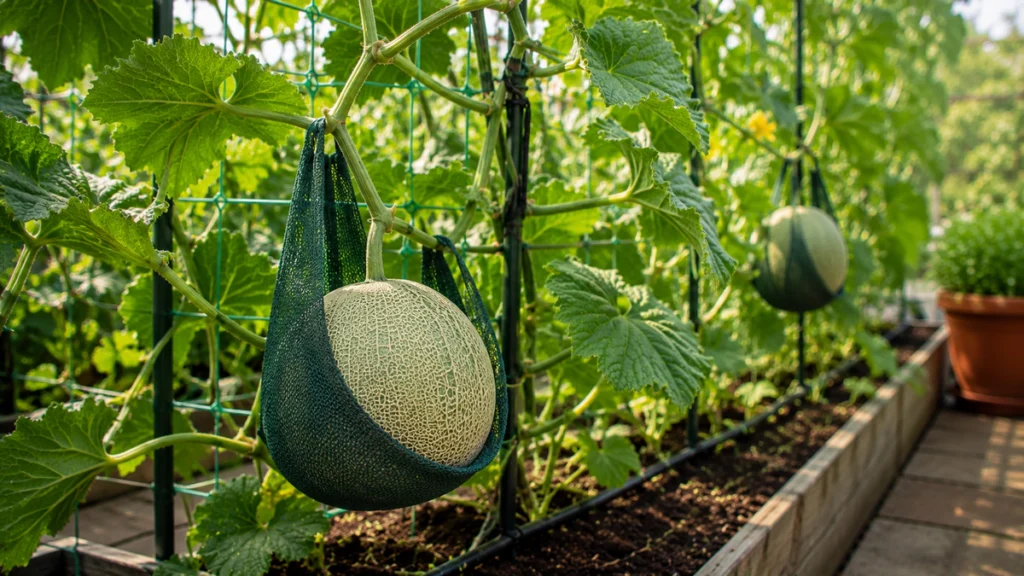
You can let vines trail on the ground, but small UK gardens benefit from vertical training. A support frame saves space and keeps the leaves away from damp soil.
Pinch out the growing tip once the plant is established to encourage side shoot growth. Keep only a few developing fruit on each plant. This sends energy into fewer, sweeter melons instead of many weak ones.
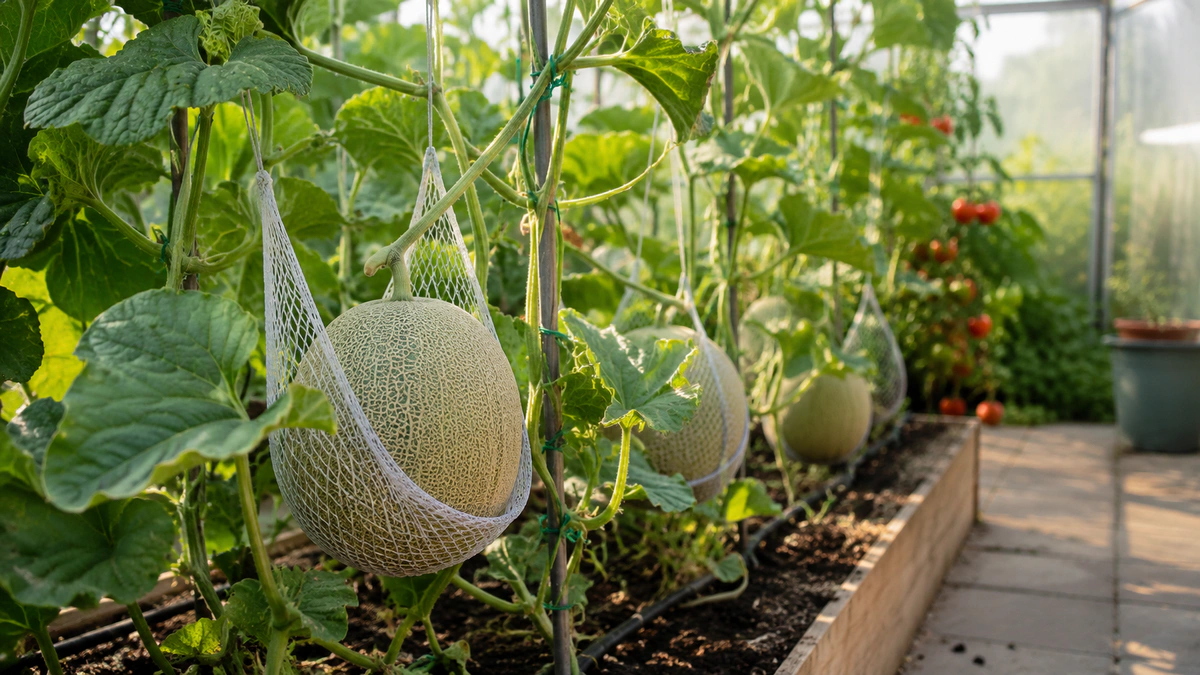
Use soft netting, an old net, old tights, or mesh slings to hold hanging fruit. This simple fruit support stops snapped stems, and fruit support keeps the crop cleaner. A heavy melon should never hang by the stem alone.
Set Fruit When Bees Are Scarce
Melons produce separate male and female flowers. Male flowers appear first, so do not worry if early blooms drop without fruit.
Female flowers have a tiny swelling behind the bloom. To set fruit by hand, touch a small brush to a male flower, then dab the pollen into the female flower. This is useful for greenhouse melons when doors stay closed or insects are few, and it gives greenhouse melons better pollination and a better chance of even fruit set.
Good flower contact means better-shaped fruit. Poor flower contact can leave small, misshapen melons that stop growing.
Protect Plants From Common UK Problems
Slugs, aphids, cucumber-family mildew, cold nights, weed growth, and any single pest outbreak are the main problems. Check foliage every few days and act before damage spreads.
RHS advice on slugs and snails favours changes to growing practice as the main way to limit feeding damage. For young melon plants, regular inspection, removing nearby hiding places and protecting tender growth are more useful first steps than treating every slug or snail in the garden as a pest.
A melon plant reacts fast when the roots get cold or the leaves stay wet. I would rather prevent trouble with airflow and clean watering than rescue a weak vine later.
| Problem | Quick Fix | Why It Works |
|---|---|---|
| Cold Soil | Use black mulch, cloches, or a covered structure | Roots grow faster in steady warmth |
| Slugs | Raise pots, clear hiding places, and inspect at dusk | Young stems are most at risk |
| Aphids | Rub off small colonies or use a gentle soap spray | Early control protects soft growth |
| Powdery Mildew | Water the growing mix, not the leaves, and improve airflow | Dry leaves reduce fungal pressure |
| Weak Fruit Set | Hand set female flowers | Covered plants may lack insect visits |
Pick Ripe Fruit at the Right Moment
A ripe melon gives you several clues, and these checks help any gardener avoid waste. The skin colour warms, the fruit smells sweet, and the stem starts to loosen. Some cantaloupe varieties slip from the vine with a gentle lift.
Do not pick too early. A melon can soften after harvest, but the best flavour develops on the plant and the melon can ripen fully. If the weather turns cool, bring nearly ripe fruit indoors and use it once the aroma improves.
One strong melon plant can teach you more than a row of stressed vines. Keep notes on where it grew, how often you fed it, and when the first female flower appeared. That makes the next attempt easier without tying the advice to any date.
For a related garden planning step, HouseFery’s guide to garden landscaping ideas for practical outdoor layouts can help you think about where warm edible beds, pots, and seating areas fit together.
Small-Space Setup Ideas That Work
You do not need a large plot for melon growing in UK gardens. A single deep pot beside a sunny wall can hold one vine, one support, and two carefully supported fruit.
Choose a container you can reach from all sides, especially if fruit support needs adjusting as the crop swells. Put the heaviest side of the support against a wall or fence, then tie soft loops around the main stem as it grows. Greenhouse melons in pots need more watering checks, and greenhouse melons in bags need the same attention than border plants, but they are easier to move, inspect, protect, and support.
A cantaloupe plant also fits well near other warm edible crops, such as tomatoes and basil, as long as each plant has enough air. Avoid cramming the vine into a damp corner just because the corner is empty.
Fine-Tune Soil, Spacing, and Variety Details
Once the basics are working, small details make the crop steadier. Choose full sun, good soil, and a position with room to spread if you plan to trail vines rather than train them upward. In small spaces, one compact plant is better than several crowded young plants.
Before you plant seeds, check the danger of frost and wait until the soil is warm. If you start seeds indoors, sow one or two seeds per pot about 1 inch deep, then keep the strongest young plant after true leaves form. Setting out transplants is safer when roots are firm but not pot-bound.
Add organic matter for drainage and steady soil moisture. A thin layer of mulch can protect roots, while fruit support protects heavy crops, but avoid wetting the leaves. Avoid overhead watering because it can encourage leaf spot, wilt, and blossom end stress, so water thoroughly at the base and keep a steady supply of water rather than quick splashes.
Some varieties, such as Hale’s Best Jumbo, appear in many guides, but UK gardeners should still check whether a variety suits cooler climates. Honeydew and honeydew melons can be tempting, yet a compact cantaloupe is usually easier to grow in a home garden. If you want to learn how to grow several types, start with one practical guide and repeat what worked.
Growth and fruit quality depend on balanced feeding. Nitrogen supports early leaves, while phosphorus and potassium support roots, flowers, and ripening. Do not overfeed once fruit sets, because lush leaves can shade the crop and slow sweet flavor.
Seeds germinate best when conditions stay warm and even. Garden beds should feel warm before you plant melons, because cantaloupe vines do not tolerate frost. Ignore broad spacing rules such as feet apart in rows or seeds per hill if you are using pots; an ideal garden plan gives one vine enough air, a bit of shade from harsh glass heat, and enough space for fruit support.
Worth knowing
Can You Grow a Melon Plant Outside in the UK?
Yes, but choose a sheltered, sunny heat trap and use covers early. A covered structure is more reliable because it holds warmth for longer.
How Long Does a Melon Plant Take to Fruit?
Most types need a long warm spell from seed to harvest. Starting seeds under cover gives the plant more time to grow before it moves outside or under cover.
Is It Better to Grow Melons on the Ground or a Trellis?
A trellis works well in small gardens because it saves space and improves airflow. Support each melon with a sling once it starts getting heavy.
Do Melons Like Tomato Feed?
Yes. Use a balanced feed for early growth, then use tomato feed once flowers and fruit appear because potassium supports cropping.
How Many Melons Should One Plant Carry?
Keep two to four fruit on one strong plant. Fewer fruit usually means better size, sweetness, and ripening.
Where to begin
A cantaloupe plant is not the easiest edible crop for cool gardens, but it is a satisfying one when you give it heat, rich compost, fruit support, steady water, and careful hand setting. Start small, use the brightest protected spot, and treat melon growing as a warm-space project; with greenhouse melons, fruit support, and patient ripening, you can turn one plant into a sweet home-grown reward.