Small bedroom organisation works best when the room has fewer jobs, clearer storage, and a simple daily reset. Good bedroom storage helps every item earn its place, while decluttering keeps the room calm instead of cramped.
If you want to organise a tight room without buying a full furniture set, start with what blocks the floor, the bed, and the closet. The right layout, decluttering routine, and small bedroom organisation ideas can make even a compact apartment room feel more restful.
Quick Answer
To organise a small bedroom, remove anything you do not use, keep the bed area clear, choose furniture with built-in storage, use the walls for shelves and hooks, and give clothes, shoes, cables, and bedside items fixed homes. Keep only daily essentials visible, then reset the room for five minutes each evening.
The fastest small bedroom organisation plan is: declutter first, measure the room, store upwards, hide seasonal items under the bed, and keep surfaces almost empty.
Start with Decluttering, Not More Storage
Buying boxes before decluttering usually moves the mess into prettier containers. Empty one drawer, one shelf, or one side of the closet, then decide what should stay.
Use three simple piles:
- Keep: items you use, wear, or need in this room.
- Move: paperwork, tools, toys, or spare items that belong elsewhere.
- Donate or discard: clothes, decor, and extras that no longer help you.
For more inspiration, Architectural Digest shares organiser-approved small bedroom storage ideas that show how small changes, not just bigger furniture, can make a room work harder.
Decluttering is the first storage solution because it reduces what the room has to hold. Once the excess is gone, the right shelf, bin, drawer, or basket becomes easier to choose.
You may see these called small bedroom organization ideas or bedroom organization tips in search results. The useful trick is the same in a UK home: choose the best storage for what you own, not for an ideal version of the room.
Plan the Bed, Walking Space, and Furniture First
The bed is usually the largest item, so plan around it before moving anything else. Keep a clear path to the door, the closet, and at least one side of the bed if the room allows it.
A low-profile bed frame can make a tiny bedroom feel lighter. A storage bed, ottoman bench, or nightstand with a drawer can add function without filling another corner. If you need a desk, choose a wall-mounted or foldable desk rather than a wide table that catches clutter.
If the room still feels tight, look at the scale of the furniture. A small dresser, narrow bedside table, or open bookshelf may work better than a deep wardrobe that blocks the wall.
When the furniture itself feels wrong for the room, this guide to cottage bedroom furniture ideas can help you compare beds, dressers, and storage pieces that suit softer, calmer rooms.
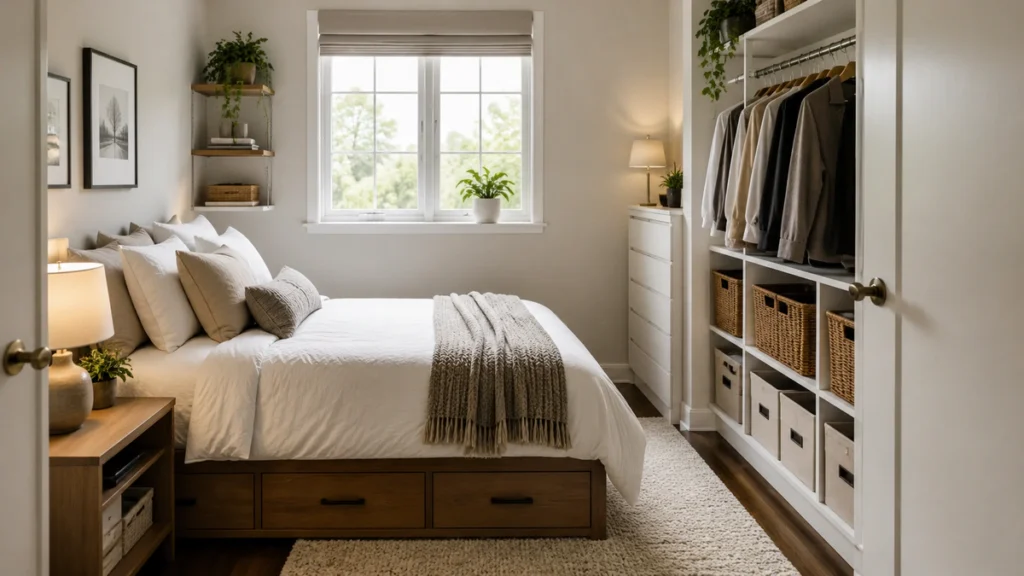
A useful layout gives you space to move before it gives you space to store. That is why measuring the bed, door swing, drawer clearance, and walking route matters before any makeover.
Use Hidden Bedroom Storage Around the Bed
The area underneath the bed is valuable storage space, especially when the closet is small. Use low rolling drawers, lidded boxes, or vacuum bags for seasonal clothes, spare bedding, and bulky blankets.
Keep the system easy to reach. If you use something every week, it should not live in a heavy box at the back. Save the hardest-to-reach spot for winter bedding, luggage, or items you only need occasionally.
A bedside caddy can replace a nightstand in a very small space. It can hold a book, charger, glasses, and a small notebook without taking up floor area.
Hidden bedroom storage should hold overflow, not everyday clutter. The less you have to lift, drag, and dig, the easier it is to stay tidy.
Use Walls, Doors, and Vertical Space
When the floor is full, the walls are the next place to organise. Floating shelves can hold books, baskets, plants, and a few personal pieces without making the room feel heavy.
Hooks work well behind the door or beside the wardrobe. Use them for a dressing gown, tomorrow’s outfit, a tote bag, or a hat, but avoid turning every hook into a long-term dumping point.
A tall, narrow bookshelf can also act as built-in storage if you use matching baskets on the lower shelves and lighter decor near eye level. In a rented apartment, freestanding storage is often easier than drilling into every wall.
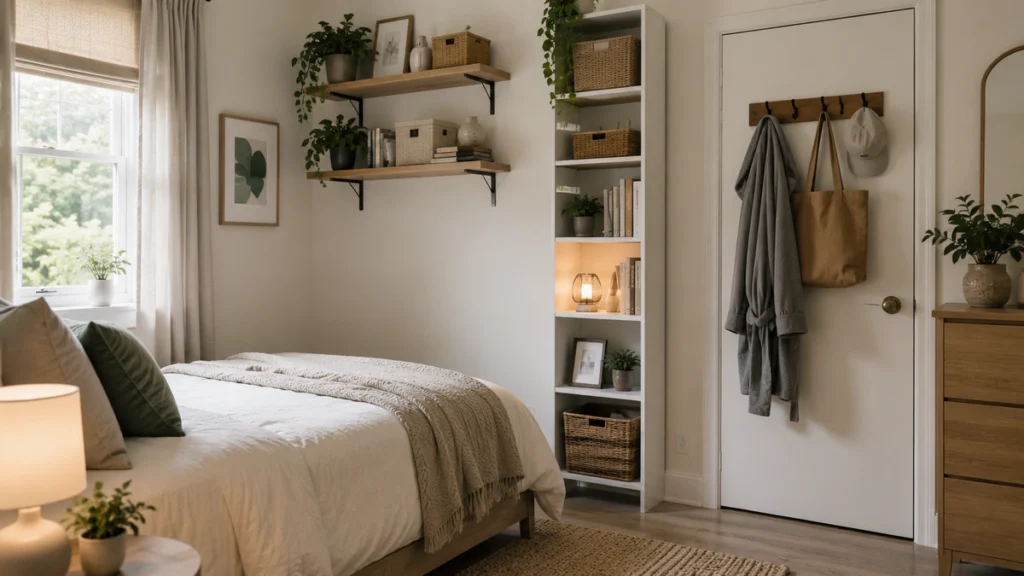
Vertical storage works best when the lower half of the room stays simple. If every wall, shelf, and door is packed, the room will still feel busy.
Make the Closet Easier to Use
A closet often fails because it tries to store every category in one crowded rail. Start by grouping clothes by type, then remove anything that is damaged, the wrong size, or not worn.
Slim matching hangers create more closet space and make the rail easier to scan. Shelf dividers keep folded knitwear, jeans, and T-shirts from sliding into one another. A shoe rack or labelled bin keeps shoes from spreading across the floor.
Try one drawer for daily basics, one shelf for folded items, and one high shelf for seasonal pieces. If you share the room, divide storage zones by person so both sides stay accountable.
A simple stack can help: one drawer organiser for underwear, one clear bin for spare pillow covers, one shoe row, and one labelled basket for off-season accessories. You do not need a branded IKEA system, but that modular approach is useful when every shelf has to earn its place.
The best closet organiser is the one you can maintain on a busy morning. If it takes too long to put clothes away, the system is too complicated.
Keep the Nightstand and Surfaces Minimal
Small rooms look messy quickly when every surface is full. Keep the nightstand to a lamp, a book, a charger, and water. Everything else should go in a drawer, basket, or another room.
Cables also need a home. Use cable clips, a charging tray, or a small box behind the nightstand so leads are not hanging across the floor. This small hack makes the bedroom look calmer straight away.
Keep decoration simple too. One framed print, one plant, or one textile detail can add warmth without crowding the room. If bare walls feel too plain after decluttering, foldable linen accent wall decor can add texture without stealing floor space.
Clear surfaces make a small bedroom feel organised even before you open a drawer. Treat every visible surface as a place for essentials, not storage overflow.
Create Simple Zones Without Adding Clutter
A small bedroom may need to support sleeping, dressing, reading, and occasional work. You can create zones without buying more furniture by using position, lighting, and habits.
Put work items in one basket, reading items on one shelf, and laundry in one covered hamper. If you exercise in the room, keep equipment in a single basket or under-bed drawer rather than leaving it beside the door.
Borrow the same logic used in compact service spaces. This guide to small-space utility room storage shows how zones, baskets, lighting, and wall storage can make a tight room more practical.
Zones only work when each one has a boundary. A chair should not become a closet, and a desk should not become a dressing table unless you plan it that way.
Choose Colours, Light, and Decor That Calm the Room
Light colours can make a small bedroom feel more open, but the room does not have to be plain white. Soft blue, warm beige, muted green, and pale grey all work if the bedding and furniture stay simple.
Good lighting matters too. Use a warm bedside lamp, clear window coverings, and one brighter overhead light for cleaning. The Sleep Foundation guide to bedroom environment notes that light, noise, temperature, and bedding all affect how restful a bedroom feels, so it is worth making the room calm as well as tidy.
Keep pillows and blankets under control. A neat bed can have personality, but too many cushions create more items to move every night and every morning.
Calm decor supports organisation because there is less visual noise to fight. Let storage do the hard work and let decoration stay light.
Build a Five-Minute Reset Routine
Small bedroom organisation only lasts when the reset is easy. Spend five minutes each evening putting clothes in the hamper, returning cups and paperwork, clearing the nightstand, and straightening the bed.
Once a week, check the floor, closet, under-bed storage, and laundry. Once a season, review clothes, bedding, shoes, and anything stored in bins.
Use this short routine:
- Put clean clothes away before opening another basket.
- Return anything that belongs in another room.
- Clear the bed and floor before cleaning surfaces.
- Empty one drawer or shelf when clutter starts to build.
- Keep a donation bag in the closet for items you no longer use.
The room stays organised when the routine is smaller than the mess. Do not wait for a full bedroom makeover if a five-minute reset will fix the problem.
Frequently Asked Questions
What Is the Best Way to Organise a Small Room with No Storage?
Use vertical storage, under-bed boxes, wall hooks, a narrow bookshelf, and furniture with drawers. Remove anything that belongs elsewhere before adding new storage.
Where Should I Start When Organising a Small Bedroom?
Start with decluttering the floor, bed, and closet. These areas affect the room most and show you what storage is actually needed.
How Can I Make a Small Bedroom Look Bigger?
Keep the floor visible, use lighter colours, choose smaller furniture, leave surfaces clear, and use wall storage instead of extra floor furniture.
How Often Should I Declutter a Small Bedroom?
Do a quick reset daily, a deeper tidy weekly, and a seasonal decluttering session for clothes, bedding, shoes, and stored items.
Final Thoughts
Learning how to organise a compact room does not require expensive furniture or a full renovation. Start with fewer items, clear paths, smart bedroom storage, and simple routines that make the room easier to use every day.
Small bedroom organisation feels easier when each item has a clear home, bedroom storage supports the way you live, and decluttering happens before the room becomes crowded again.