Fresh walls make a room feel finished, but hang pictures too soon and you can mark the surface, pull at soft paint, or leave dents around the fixing. The safest timing depends on paint curing, the room conditions, and how heavy your wall decor is.
If you want to hang pictures without spoiling the finish, think beyond whether the wall feels dry. Paint type, humidity, plaster or drywall, and the fixing method all affect when picture frames, hooks, and adhesive strips should go back up.
Quick Answer
Wait at least 24 hours after painting before hanging very light pictures on a dry, well-ventilated wall, 48 to 72 hours for most framed wall decor, and one to two weeks before using adhesive strips or hanging heavy pieces. If the room is humid, cold, newly plastered, or painted with oil-based paint, wait longer before you hang pictures.
Why Paint Needs Drying and Curing Time
Paint can feel dry long before it is strong enough to handle pressure from frames, hooks, adhesive pads, or outlet covers. Drying is the point where the surface no longer feels wet. Paint curing is the slower stage where the coating hardens and bonds properly to the wall.
The surface test is useful, but it is not the whole answer. A wall may feel dry to the touch while the finish is still soft underneath. Pressing a frame, nail head, hook, or sticky strip into that finish can leave a shine mark, lift a small patch, or make the paint peel later.
Good airflow matters too. The US Environmental Protection Agency explains that paints can release volatile organic compounds indoors, so it is sensible to keep windows open where possible and use good ventilation after painting. Ventilation helps comfort, odour control, and drying conditions, especially in smaller rooms.
How Long Should You Wait Before Hanging Pictures?
Every homeowner wants a clear answer, but the long to wait depends on the finish and room. Freshly painted walls need enough hours before hanging so the surface can resist pressure, rubbing, and adhesive pull.
How Long to Wait by Paint Type
The paint type gives you the first timing guide. Product labels should always win, but these waiting times work as a safe starting point for normal interior paint.
- Water-based emulsion or latex paint: wait 24 hours for very light frames, then 48 to 72 hours for normal picture hanging.
- Oil-based paint: wait at least 72 hours for light items, and closer to a week for heavier frames or tight fittings.
- Gloss, eggshell, and satin finishes: give them extra time because pressure marks can show more clearly on smooth finishes.
- Fresh plaster mist coats: wait until the plaster and each coat of paint dry properly before adding weight to the surface.
- Chalk, limewash, or specialist decorative paint: follow the maker’s cure time before using adhesive hooks or picture hanging strips.
If you are planning a wider refresh, keep a note of timing as part of your House Fery home improvement ideas rather than treating picture hanging as the final rushed job. For styling inspiration after the practical checks are done, House & Garden interior design inspiration can help you choose art that suits the new colour.
How Humidity, Temperature, and Wall Material Change the Wait
Humidity is one of the biggest reasons a wall stays vulnerable. Bathrooms, utility rooms, kitchens, and damp older homes can need more time than a sunny living room. If the air feels heavy or the room has poor airflow, wait before hanging anything that presses flat against the paint.
Cold rooms also slow the process. Interior paint usually behaves best in moderate, stable temperatures. A cold spare room, porch, or unheated hallway may need an extra day or two, even when the same paint dries quickly elsewhere in the house.
Wall material matters as well. Drywall is usually predictable once the paint is dry. Old plaster can hold moisture, especially after repairs. Brick, render, textured walls, and patched areas can dry unevenly. **If one area looks dull or feels cooler than the rest, leave it alone and test again later.**
How Frame Weight Affects Safe Picture Hanging
The heavier the item, the longer you should wait. A postcard-sized frame is very different from a large mirror, gallery wall, or shelf. Weight increases pressure around the fixing and can pull at the finish if the paint has not fully cured.
Use this simple guide before you hang pictures:
| Item Type | Safer Waiting Time | Best Fixing Choice |
|---|---|---|
| Small paper print or light frame | 24 to 48 hours | Fine pin, small hook, or light hanger |
| Medium framed print | 48 to 72 hours | Picture hook fixed into a suitable wall point |
| Large frame or gallery wall | At least one week | Measured hooks, plugs, or wall anchors |
| Mirror, shelf, or heavy wall decor | One to two weeks or full cure time | Proper anchors fixed into studs, masonry, or plugs |
| Adhesive strips or removable hooks | One to two weeks | Only when the paint is fully firm and clean |
Adhesive strips are convenient, but they can be risky on fresh paint. They need a firm surface to grip, and removing them later can pull at a weak finish. For heavier wall decor, a mechanical fixing is usually safer than a sticky pad.
How to Test Whether the Wall Is Ready
Before committing to a visible section, test a discreet spot near the skirting board or behind where furniture will sit. Lightly press a clean fingertip against the wall for a few seconds. If it feels tacky, leaves a mark, or changes sheen, wait longer.
You can also place a small piece of low-tack painter’s tape on a hidden area for a short time, then remove it slowly. If any paint lifts, the wall is not ready for adhesive strips. Do not use strong tape for this test because it can damage even cured paint.
When in doubt, delay the heavy pieces and start with layout planning. Measure the wall, mark frame positions with paper templates, and check the 2/3 rule for hanging pictures over furniture. Art usually looks balanced when it is around two-thirds the width of the sofa, console, or bed beneath it.
Safer Ways to Hang Pictures After Painting
Once the wall is ready, use the lightest reliable fixing for the job. A small hook can hold a light frame without making a large hole. Heavier pieces need suitable plugs, wall anchors, or screws fixed into studs or masonry.
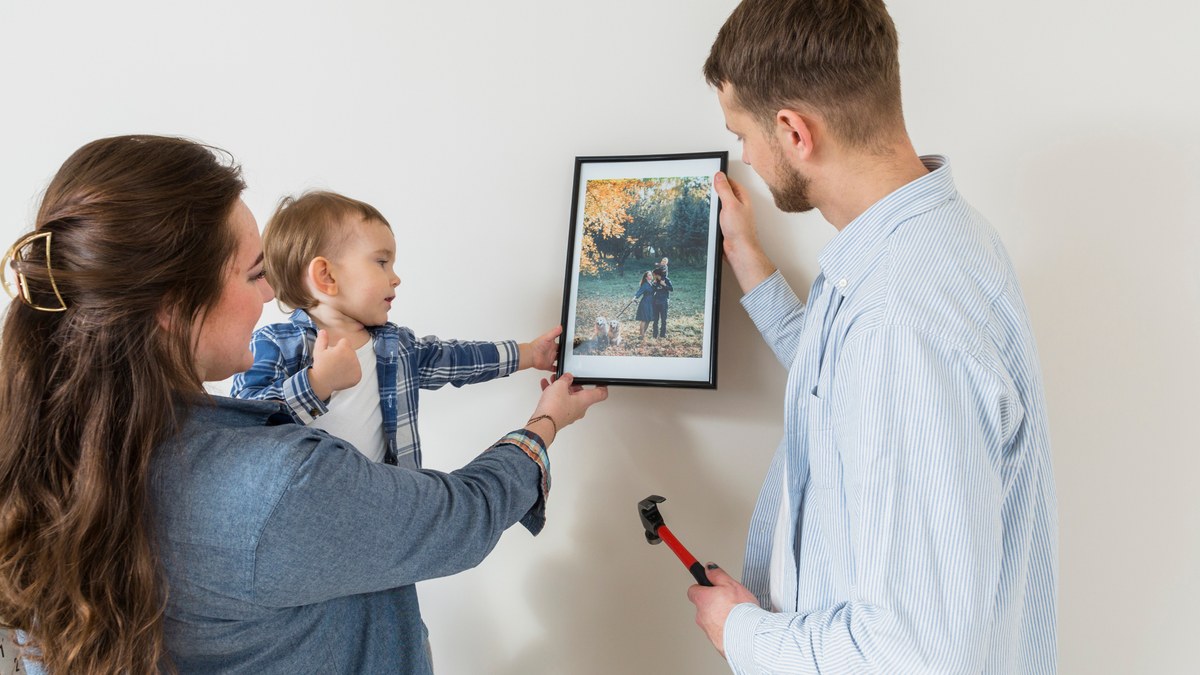
Lay the arrangement on the floor before you start. This avoids repeated holes and keeps the new finish cleaner. If you are creating a gallery wall, cut paper templates for each frame and tape them lightly in place only after the paint has had enough time to cure.
For rented homes or frequent decor changes, picture ledges, easels, leaning frames, and existing shelves can display art without touching the wall. These options let you enjoy wall decor while you wait for the safest time to hang pictures properly.
Special Cases That Need More Time
Some rooms and fixing jobs need a cautious approach. High humidity in a bathroom, poor airflow in a hallway, or an exterior painting project can all extend dry time. A dehumidifier may help the room feel more comfortable, but it should not replace patience.
If a professional painter or painting company gives you a longer cure time, follow that advice. They may know the exact product, number of coats, wall condition, and whether a long-lasting paint system needs 2-4 weeks to fully cure before heavy pressure is added. This is especially true after professional painting, when a neat finish matters more than speed.
Be careful when you reinstall electrical outlet covers, a light switch plate, cabinet hardware near a painted surround, or any screw-fixed fitting. Paint takes longer to harden around tight edges, so wait 48–72 hours where possible and loosen the fitting slightly if it seems to stick.
You do not need to wait forever, but you do need the right tools for the job. Let paint dry before hanging pictures, then use clean hooks, measured marks, and suitable anchors. If you are hanging light artwork, you can usually decorate sooner than you would with a mirror or shelf.
To help new paint cure evenly, ventilate the room gently and avoid pressing frames flat against it. When you rehang art, test the least visible fixing first. It does not take paint long to mark if the surface is still soft, so patience is the safer choice.
If the same refresh includes doors, handles, or trim, plan those touch points before the final gallery layout. These painted door handles ideas show how hardware prep, primer, and finish choices affect the rest of a room update.
Common Mistakes to Avoid
The biggest mistake is relying only on the first dry feel. Another common problem is using adhesive hooks too early because they look gentle. A sticky strip can cause more damage than a small picture hook if the paint curing process is not complete.
Avoid pushing frames tight against the wall straight away. Felt bumpers on the back corners can help air move behind the frame and reduce rubbing. They also stop the frame from sticking slightly to a soft finish.
Do not ignore the wall itself. If the surface was dusty, greasy, badly patched, or painted over old flaking paint, the new finish may be weaker. In that case, wait longer and use fixings that transfer the load into the wall, not just the painted surface.
Frequently Asked Questions
Can I Hang Pictures 24 Hours After Painting?
You can hang pictures after 24 hours only if they are very light, the wall is dry, the room is well ventilated, and the paint is water-based. For normal framed pictures, 48 to 72 hours is safer.
How Long Should I Wait Before Using Adhesive Strips?
Wait one to two weeks before using adhesive strips on newly painted walls. Adhesives need a hard, stable finish, and fresh paint can peel when the strip is removed or repositioned.
Can I Refit Outlet Covers After Painting?
Outlet covers and switch plates can usually go back after the paint is dry to the touch, but avoid tightening screws too hard. If the paint sticks to the edge of the cover, it may tear when removed later.
Does Paint Cure Faster With a Fan?
A fan can help airflow, but do not blast dust at the wall or overheat the room. Gentle ventilation is better than trying to force the surface to dry quickly.
What If I Hung a Frame Too Soon?
Remove the frame carefully and let the area harden. Small shine marks may settle, but lifted or peeled paint may need light sanding, touch-up primer, and a fresh coat of paint.
Final Thoughts
The safest answer is to wait 24 hours for light items, 48 to 72 hours for most frames, and longer for heavy pieces, adhesive strips, humid rooms, or slow-curing finishes. If you want to hang pictures neatly, give paint curing time to do its job, choose fixings that suit the wall decor, and let the wall material guide your patience.