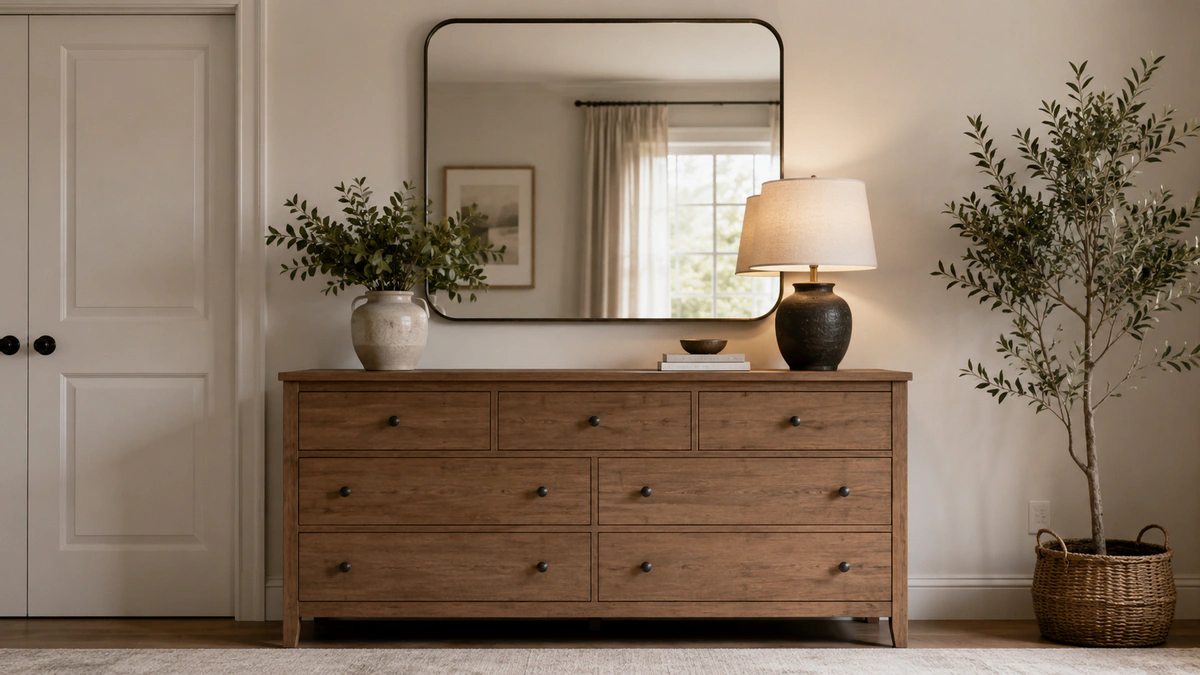
A mirror above dresser furniture can make a bedroom feel brighter, taller, and more finished. It can also look awkward fast if the gap is too big, the style is too wide, or the hanging line fights with the furniture below it.
This guide gives you simple measurement rules, bedroom mirror placement checks, dresser styling ideas, and mirror above dresser examples you can use before you put holes in the wall.
Quick Answer
Place the bottom edge 15-20 cm above the dresser top in most bedrooms. Use the lower end for small dressers, low ceilings, or mirrors used while seated. Use the higher end if you keep taller lamps, vases, or framed decor on the dresser.
The safest rule is this: leave enough breathing room above the dresser, keep it centred, and make sure the middle sits close to eye level when you stand in front of it.
For proportion, choose a piece that is about two-thirds to three-quarters of the dresser width. If the dresser is 120 cm wide, an 80-90 cm piece will usually feel balanced.
Best Height for a Mirror Above Dresser Furniture
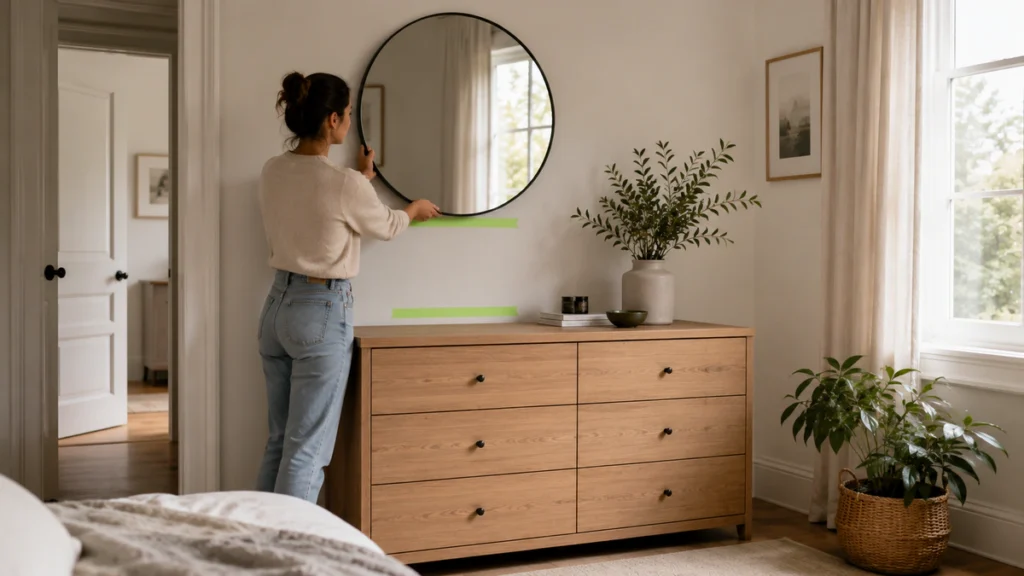
The best height for a mirror above dresser furniture is not one fixed number. It depends on the height of your dresser, the size of the mirror, and how you use the top surface. This mirror above dresser measurement should feel useful, not decorative only.
Start with a 15-20 cm gap from the dresser top to the bottom edge. This spacing works because it gives the furniture and mirror a clear visual connection without making them look cramped.
Use this quick measuring method:
- Clear the dresser top.
- Mark 15 cm and 20 cm above the top edge with painter’s tape.
- Hold the mirror against the wall, or tape out its shape.
- Step back to the doorway and check the full wall.
- Adjust for lamps, jewellery stands, candles, or artwork.
The piece should feel like part of the dresser zone, not a separate wall feature floating above it. If you can fit a large plant or tall picture between the dresser and glass, the gap is probably too wide.
Choose Size and Proportion Before You Drill
A well-sized mirror above dresser furniture should look related to the dresser below it. A tiny piece can make a wide dresser look heavy. A huge one can crowd the wall and make the dresser look like an afterthought.
Aim for a width that is narrower than the dresser, but wide enough to hold the wall visually. Two-thirds to three-quarters of the dresser width is the easiest guide.
For more home decor and practical room planning ideas, browse HouseFery home styling guides. If you want visual inspiration beyond the basics, House & Garden mirror ideas can help you compare shapes, frames, and room moods before buying.
Dresser style matters too. A chunky timber dresser can handle a thicker framed design. A slim painted dresser may suit a light metal edge, a soft arched shape, or a minimalist frameless design. This is where dresser styling should guide the frame, not the other way round.
If you are changing more than this area, this guide to cottage bedroom furniture ideas shows how beds, storage, mirrors, and vintage accents can work together in one calm bedroom plan.
Measure the Wall, the Dresser, and the Person Using It
Good bedroom mirror placement starts with the wall, but it should end with the person who uses the room. A glass placed for a six-foot adult may not work for a child, a seated dressing table, or a low attic bedroom.
The centre should sit near your natural eye level when you stand in front of the dresser. This is usually around 145-160 cm from the floor, but your room may need a different mark.
Check these three measurements before you hang it:
- Dresser height from the floor to the top
- Glass height from bottom edge to top edge
- Eye level of the main person using it
A tall dresser already lifts the glass. A low dresser gives you more wall space and may need a slightly higher position. A long horizontal design can sit closer to the dresser top, while a tall arched mirror may need more careful positioning so the top does not crowd the ceiling.
This small measuring step prevents the common mistake of hanging for the wall only. The piece needs to work for the dresser, the room, daily use, and the wider bedroom mirror placement plan.
Use the Right Gap for Different Mirror Shapes
Shape changes the ideal height. A rectangle, arch, circle, and oval each create a different visual weight.
The more open wall you can see around the glass, the more precise the placement needs to be. A round design with a big blank wall around it can look lost if it sits too high, so treat this as a mirror above dresser proportion check.
A rectangular dresser mirror is the easiest to place. Keep the bottom edge 15-20 cm above the dresser and align the centre with the centre of the furniture. A wall mirror with a wide edge may need a touch more breathing room so the frame does not feel heavy.
An arched design usually looks best when the straight sides begin close to the dresser line and the curve rises into the wall space. This creates height without making the room feel formal.
A round design often needs to sit slightly lower than you expect. The curved bottom edge creates more visible wall, so a 12-16 cm gap can look better than 20 cm on a compact dresser.
A vanity mirror or pivot design should be tested at the angle you will use it. The right height is the one that reflects your face and upper body without forcing you to bend.
Use This Dresser Mirror Buying Checklist
A good dresser mirror should suit the room before it suits a trend. Search ideas can be useful, but you do not need to copy a dresser on Pinterest to get a balanced result.
Choose a mirror that complements the dresser size, the wall, and the way you use the bedroom each day. The best mirror above dresser setup is the one that looks calm and still works when you are getting ready.
Use this checklist before buying:
- Pick a dresser mirror that is narrower than the furniture below it
- Choose a finish that repeats a handle, lamp, bed edge, or curtain pole
- Use a minimalist edge in a small room to reduce visual weight
- Try an antique finish when the dresser already has vintage detail
- Check the mirror’s weight before you choose fixings
- Tape the display on the wall before ordering a large piece
This is also where bedroom mirror placement becomes practical. A beautiful mirror over a dresser can still fail if it reflects clutter, blocks a socket, or leaves no room for a lamp. Keep the bottom edge close enough to feel connected to the dresser, then use the frame and shape to finish the decor. Good dresser styling keeps the surface useful after the mirror is hung.
Check Reflection, Functionality, and Wall Fit
Small checks stop the dresser and mirror pairing from feeling awkward later. Stand where you enter the room, then position your mirror so it adds visual height without catching clutter.
The best mirror placements are practical before they are decorative. Use a wall mirror to brighten a dim corner, but avoid placing it flush against furniture or too close to a ceiling line.
Ask these final questions before drilling:
- Does the mirror size suit the dresser size?
- Can you outline the mirror’s shape with tape and still like the room’s balance?
- Is the bottom edge around 6-8 inches above the dresser, or 15-20 cm in UK measurements?
- Do you want the mirror to reflect a window, lamp, artwork, or open mess?
- Do you need wall anchors, or can you fix into a stud or solid wall?
A pair of multiple mirrors can work above a long dresser, but only if the different shapes and sizes feel cohesive. A sleek rectangle, rustic wood piece, or soft oval can each add a touch of style. The guideline is simple: consider when hanging your mirror how it works from the door, the bed, and the spot where you get ready.
Make the Dresser Top Look Intentional
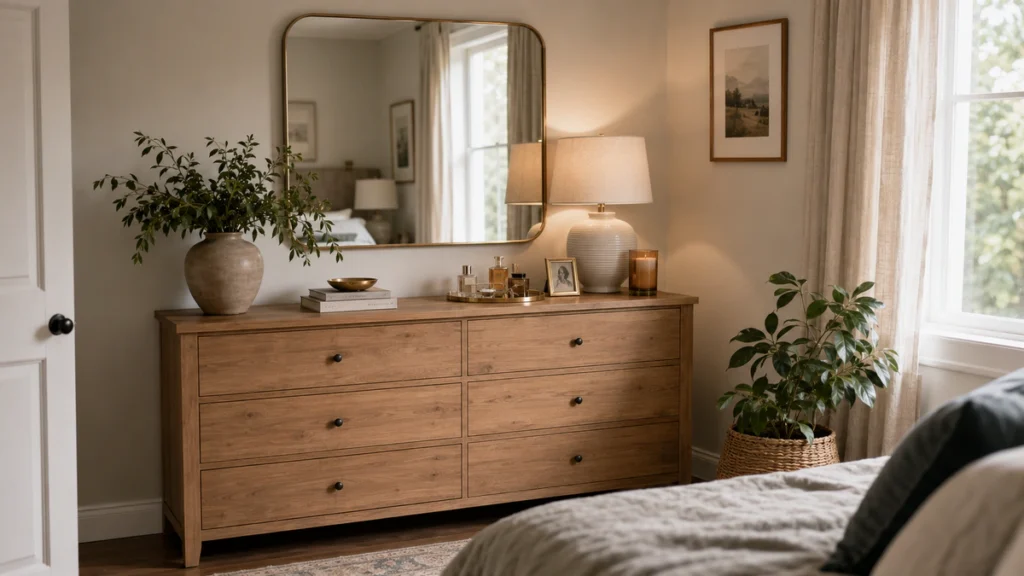
The items on the dresser affect the hanging height. A bare dresser can take a lower placement. A styled dresser with lamps, books, perfume trays, or flowers needs more room.
Leave enough space for your tallest everyday object, then add a few centimetres of breathing room. This keeps the display from touching the glass or looking trapped.
Try this simple styling formula:
- One tall item, such as a lamp or vase
- One medium item, such as framed decor or a small plant
- One low item, such as a tray, bowl, or stack of books
The glass should reflect light, colour, and texture, not clutter. If the reflection shows a messy wardrobe rail, open bathroom door, or blank ceiling, shift the angle or choose another wall.
I like to check the reflection from the bedroom doorway first. That view tells you whether the reflection improves the room or doubles the wrong part of it. It is also the quickest dresser styling test because you see the full vignette at once.
Hang the Mirror Securely and Evenly
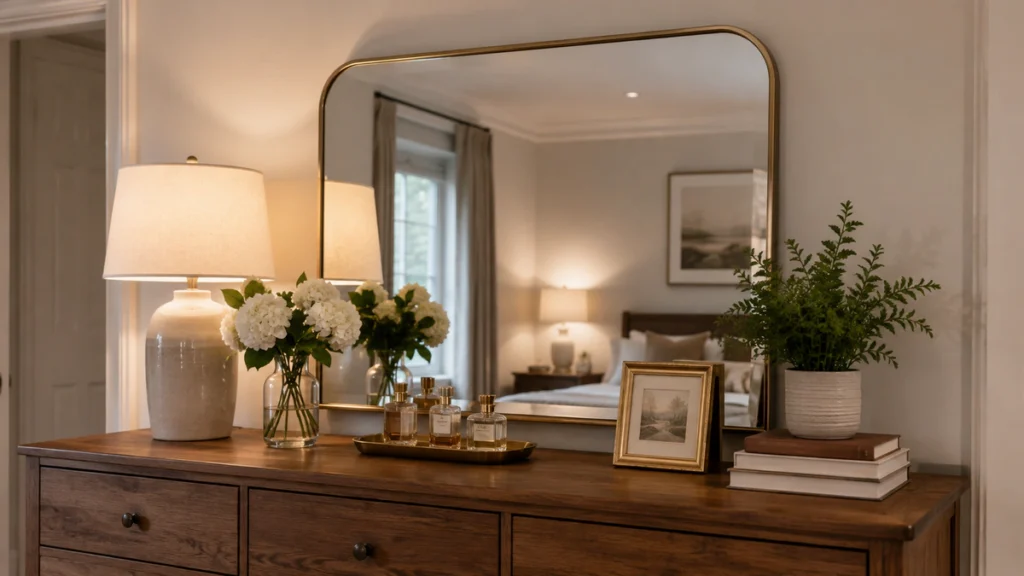
A dresser mirror can be heavy, especially with timber, metal, or antique edging. Hanging it with a weak hook or the wrong wall plug is not worth the risk.
Match the fixing to the mirror’s weight, the wall type, and the fixing points on the back. Plasterboard, brick, and stud walls need different hardware.
Before you drill, check the weight and look for the maker’s hanging instructions. Use two fixing points where possible because they spread the load and keep it level. A single central hook can twist over time.
The CPSC furniture anchoring guidance is a useful safety reminder for bedrooms with children, heavy furniture, or tall storage. If the dresser is unstable, secure the furniture first, then hang the mirror.
Use a spirit level after marking your points. Tape can trick your eye, especially on older walls or uneven floors. Stand back again before drilling. It is much easier to move tape than to fill a hole.
Common Mistakes to Avoid
Most placement mistakes come from rushing the measuring stage. The piece may be lovely, but the placement can still make the whole dresser wall feel off.
A mirror above dresser furniture should look balanced from across the room, not just from close up. Always step back before making the final mark, especially if bedroom mirror placement is part of a wider room refresh.
Avoid these mistakes:
- Hanging it too high, leaving a dead strip of wall above the dresser
- Choosing glass wider than the dresser
- Ignoring lamps, vases, or jewellery storage on the dresser top
- Using weak fixings for a heavy design
- Placing it where it reflects clutter or glare
- Forgetting to check the reflection from the doorway
Glare matters in bright bedrooms. Glass facing a strong window can throw harsh light across the room or into your eyes in the morning. Shift the piece slightly if the reflection feels uncomfortable.
Frequently Asked Questions
Should a Mirror Be Centred Over the Dresser?
Yes, centre it over the dresser in most rooms. This creates a calm focal point and makes the dresser wall feel planned. You can offset it only if a lamp, artwork, or gallery wall balances the other side.
Can a Mirror Be Wider Than a Dresser?
The piece can be slightly wider in a bold design scheme, but it is harder to make it look natural. A safer choice is a design that is narrower than the dresser by 10-20 cm on each side.
How Much Space Should Be Between a Dresser and Mirror?
Leave 15-20 cm between the dresser top and the bottom edge. Use less space for a small round design, and use more if you need room for tall decor.
Should the Mirror Match the Dresser?
The design does not have to match the dresser exactly. It should share one design detail, such as colour, wood tone, metal finish, shape, or visual weight.
What If My Ceiling Is Low?
Use a shorter design, a round piece, or an arched shape with a slim edge. Keep the gap above the dresser tight and leave breathing room between the top edge and ceiling.
Final Thoughts
The right mirror above dresser furniture usually sits 15-20 cm above the dresser top, stays narrower than the dresser, and lines up with the user’s eye level. Those three checks solve most placement problems before they start.
Use the measurements first, then judge the wall from the doorway. With sensible bedroom mirror placement, safe fixings, and simple dresser styling, your mirror above dresser setup will feel balanced, useful, and easy to live with.