Introduction
Exterior home design ideas can make a house feel warmer, cleaner, and more valuable before anyone steps inside. When curb appeal, front yard landscaping, and exterior finishes work together, the whole home feels more inviting from the street.
This guide keeps the original idea of a homey exterior but makes it easier to use. You will see how paint, siding, lighting, the entryway, outdoor space, and simple maintenance can improve the look of your home without forcing a full remodel.
If you like the same clean curb appeal but want a factory-built route, this guide to mid century modern modular home design ideas explains how modular layouts, windows, and site planning can create the look.
Quick Answer
The best exterior home design ideas for better curb appeal are to refresh the facade, choose a balanced paint color, improve the front porch or entryway, add layered landscaping, upgrade exterior lighting, and keep the roof, siding, walkway, and outdoor area well maintained.
Start with the first thing people notice from the street. Then add one practical upgrade at a time, such as a cleaner front door, warm wood accents, window boxes, brighter path lighting, or a neat garden border.
Start With the Facade and Street View
Your facade sets the first impression. Before buying decor, stand across the street and look at the full house exterior. Notice the roof, siding, windows, garage door, front steps, shutters, and walkway as one complete view.
A good exterior design starts with balance, not decoration. If one part of the home feels heavy, faded, or unfinished, the whole exterior can look less cared for.
Simple updates can create a delightful design without changing the structure of the house. You might repaint trim, clean brick, add new house numbers, repair cracked steps, or replace a tired porch light.
The goal is not to copy a magazine photo. It is to make the exterior of your home feel intentional, tidy, and connected to its architectural style.
Choose an Exterior Style That Fits Your Home
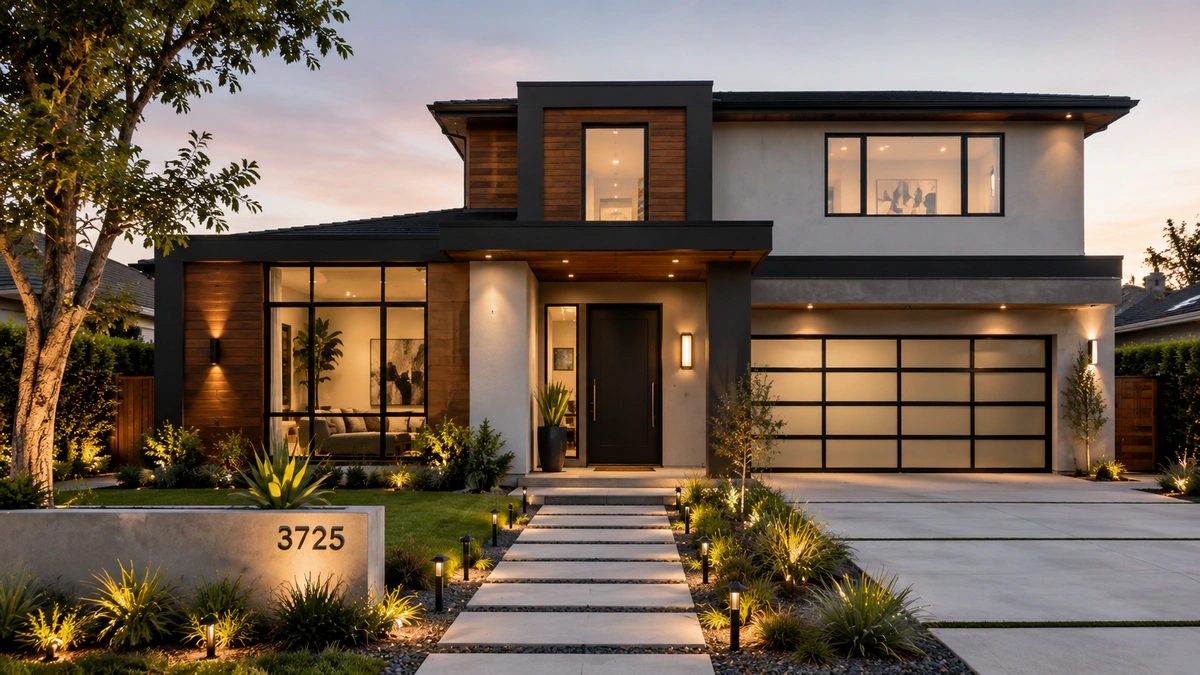
Every home has a style hidden in its shape. A modern exterior may need clean lines, dark gray trim, and simple landscaping. A farmhouse may look better with warm wood, a white exterior, black accents, and a relaxed front porch. A Tudor or historic home often needs richer contrast, textured materials, and careful architectural details.
Use the table below to match common design ideas with the area they improve.
| Exterior Area | Best Update | Curb Appeal Benefit |
|---|---|---|
| Facade | Clean siding, refresh paint, repair stucco or brick | Makes the home look cared for |
| Entryway | Paint the door, add hardware, improve lighting | Creates a clear and welcoming focal point |
| Landscape | Add shrubs, flowers, mulch, and edging | Adds color, texture, and seasonal interest |
| Walkway | Power wash, repair cracks, add path lights | Guides guests safely to the front door |
| Outdoor Space | Add seating, planters, or a small porch detail | Makes the exterior feel lived-in and warm |
Try to repeat materials and colors instead of adding too many ideas. For example, if your railing is black, you can repeat black on the mailbox, door hardware, or light fixtures. That small repetition helps the home exterior feel planned.
Use Paint Color, Siding, and Texture Wisely
Paint color can change the look of your home quickly. A white exterior can feel bright and classic. Dark gray can make trim and windows look sharper. Soft beige, sage, charcoal, and warm taupe can work well when they match the roof and surrounding landscape.
Siding, shingle, brick, stone, and stucco also affect texture. If your exterior feels flat, you may not need a major remodel. You may only need contrast between smooth paint, natural wood, planters, and the existing wall material.
The safest color plan uses three parts: the main body color, a trim color, and one accent color. The accent usually belongs on the front door, shutters, porch furniture, or planters.
A small exterior refresh can increase visual confidence significantly. It also helps visitors understand where to look first when they arrive.
Make the Entryway Feel Warm and Useful
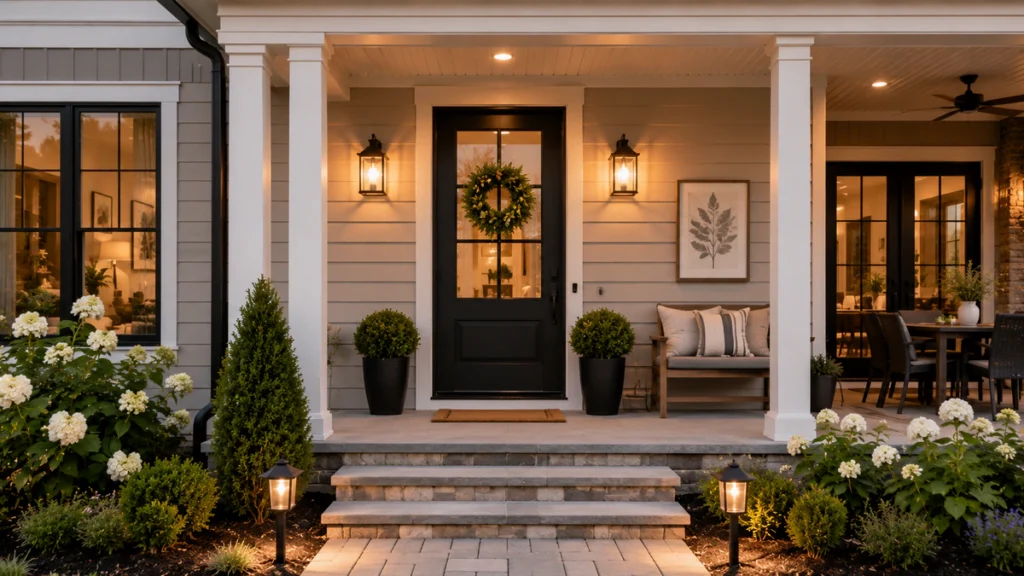
The entryway should make guests feel guided, not confused. Start with the front door. A fresh coat of paint, clean glass, updated hardware, and a simple wreath can make the entrance feel cared for in one afternoon.
Next, add comfort where space allows. A bench, two chairs, or a narrow outdoor table can turn a porch into an outdoor living detail. If the layout is larger, french doors, an outdoor kitchen, or a small dining space can connect the front or side yard to daily life without making the guest house or main home feel overbuilt.
If your porch is the main weak spot, this guide to front porch ideas to boost curb appeal gives more specific seating, lighting, greenery, and door updates to try next.
The National Association of Realtors Remodeling Impact report shows why exterior projects matter to homeowners and buyers. Outdoor upgrades can improve daily enjoyment as well as the way people judge a property from the outside.
Keep the entryway simple. Too many signs, pots, lanterns, and seasonal pieces can make the area feel cluttered. One clear focal point usually works better.
Build Curb Appeal With Front Yard Landscaping
Front yard landscaping adds color, depth, and softness to hard exterior surfaces. Start with structure before flowers. Evergreen shrubs, ornamental grasses, mulch, and clean borders keep the yard looking neat even when seasonal plants fade.
Then add flowers near the entry, along the walkway, or in window boxes. Use fewer plant varieties in larger groups instead of many single plants. This makes the landscape easier to read from the street.
Layering matters: tall plants in the back, medium plants in the middle, and low ground cover at the edge. This gives the outdoor area depth without blocking natural light or hiding the home.
If you have a small front yard, use containers, a curved bed, or a tidy path instead of crowding the space. The best landscape helps the house look better, not smaller.
Add Outdoor Lighting for Safety and Style
Lighting can make an exterior feel welcoming after sunset. Path lights guide visitors along the walkway. Porch lights help the entryway feel safe. Accent lights can highlight a tree, brick wall, facade detail, or garden bed.
Use warm bulbs for a softer homey feel. Very cool bulbs can make siding and stone look harsh at night. Solar lights are useful for low-cost path lighting, but wired fixtures often look cleaner and last longer.
Think in layers. Use one main light by the door, low path lighting near steps, and one or two accent lights where they help the architecture. This keeps the exterior design practical instead of overlit.
Match Materials to the Architecture
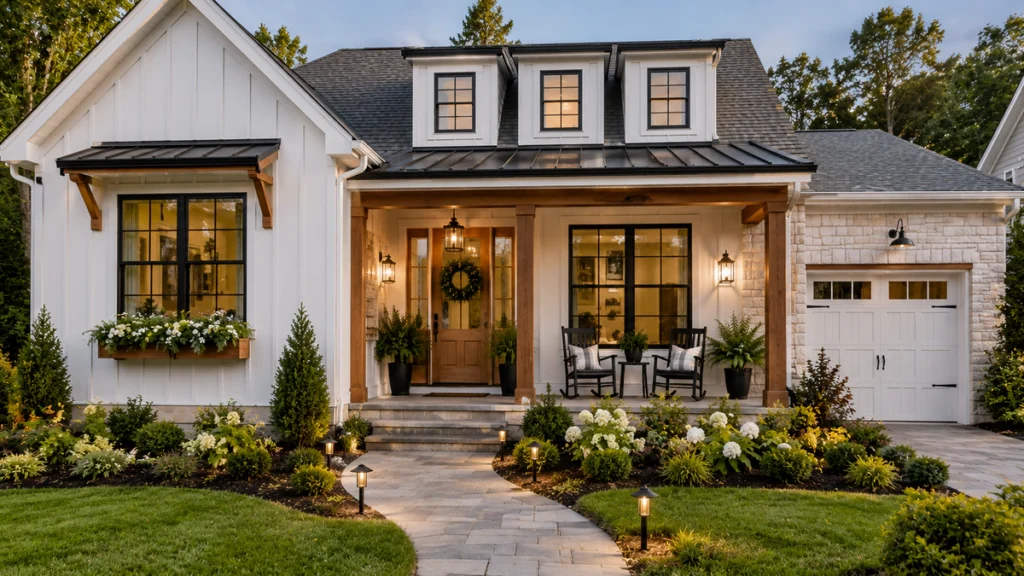
Materials should support the architectural style instead of fighting it. Brick, stone, stucco, shingle, and warm wood all send different signals, so use them where they make sense for the age and shape of the house.
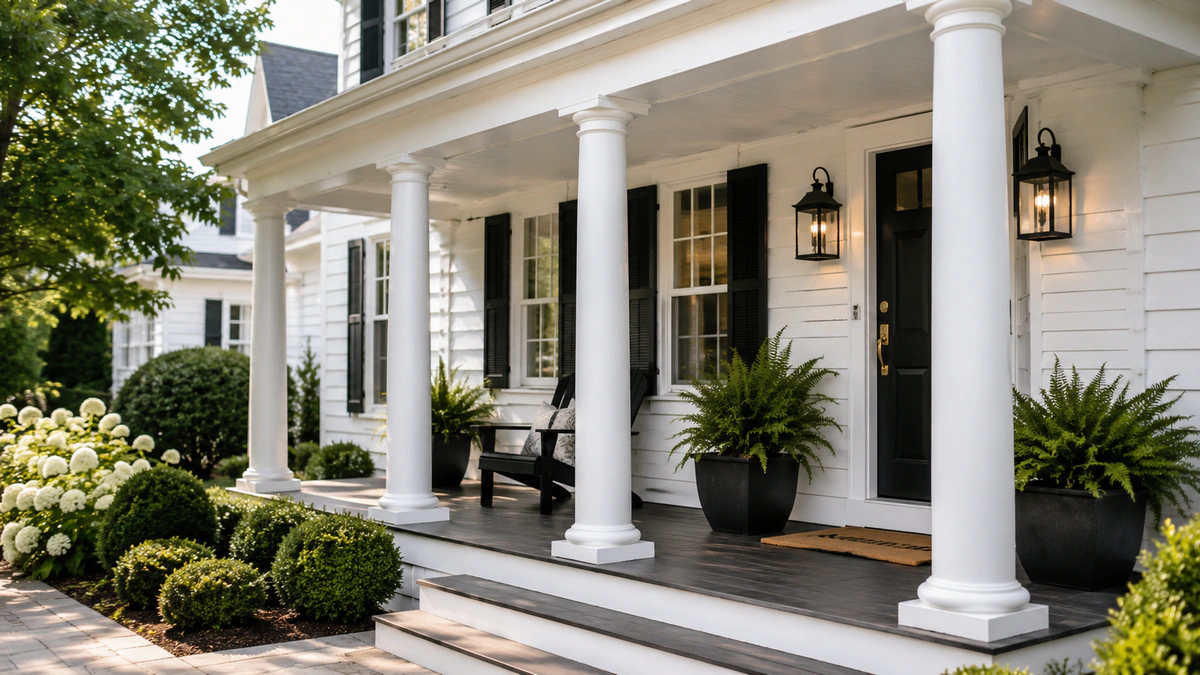
A modern farmhouse may pair a white exterior with black shutters and a wood door. A modern exterior may use dark gray trim, cleaner siding, and a simple garage door. A cottage may look better with window boxes, softer paint, and a curved walkway.
Good exterior inspiration respects what is already there. When you update the exterior, repeat one or two architectural details so the outdoor area, front porch, and outdoor living spaces feel connected.
Use this short checklist when you compare exterior design ideas:
- Choose a color palette that works with the roof, stone, brick, or siding.
- Use white trim, crisp white, creamy white, or a deeper accent only when it suits the home’s exterior.
- Consider painted brick, painting the brick, or wood cladding only if the surface needs a lasting change.
- Add visual interest with natural materials, natural wood, a covered porch, or a screened porch.
- Keep door designs, front steps, and architectural features clear so the entry feels easy to find.
- Use vibrant color on small accents, not every surface.
Maintain the Exterior So the Design Lasts
A beautiful exterior will not stay beautiful without maintenance. Check siding, paint, roof edges, gutters, caulk, steps, and outdoor furniture at least seasonally. Small repairs prevent bigger problems and keep curb appeal from fading.
Power wash dirty walkways, trim overgrown shrubs, replace dead plants, and clean porch lights. If the front door is the focal point, keep it clean and touch up chipped paint when needed.
Maintenance is part of the design. A modest home with clean edges, healthy plants, natural light, and working lights often looks better than a larger home with neglected details.
Final Thoughts
Exterior home design ideas work best when they improve the way your home looks and feels from the street. Start with curb appeal basics, then use front yard landscaping, paint color, lighting, and a warm entryway to create a home exterior that feels clean, personal, and easy to maintain.
Famous film homes are useful reminders that kerb appeal is about feeling as much as finish. For a pop-culture example, see how the Home Alone house looks today and why its red-brick exterior still feels warm, balanced, and memorable.