
Colonial columns for porches can make a plain entrance feel more balanced, formal, and welcoming. The best choice depends on porch column materials, the weight they must support, and how much front porch curb appeal you want without making the house look overdone.
For a UK home, colonial columns for porches should also make practical sense. Compare timber, PVC, GRP, and stone-effect options by size, price, delivery, weather resistance, and whether the column is decorative, load-bearing, or only a cover around an existing post.
Quick Answer
The best colonial columns for porches are correctly sized posts or column covers that match the house style, support the porch safely, and can handle local weather. For most UK buyers, treated timber is the simplest budget option, PVC is low maintenance, GRP gives the most traditional column look, and stone or cast concrete suits larger period-style entrances.
Before you buy, measure the porch height, check whether the column is structural, compare delivery lead times, and choose porch column materials that suit the level of maintenance you can manage. If the column carries any roof load, ask a builder or structural professional before replacing it.
Start With Structure Before Style
Colonial columns for porches look decorative, but they often sit where structure matters. Do not remove or replace an existing porch post until you know whether it supports the canopy, roof, or upper wall.
A decorative column wrap can hide a steel, timber, or block support. A full replacement post may need correct load ratings, proper fixings, and a solid base. This matters more in older homes, where the porch may have settled or been repaired several times.
One useful first step is to take three measurements: floor to soffit height, finished column width, and distance from the front door or wall. These numbers help you compare product listings instead of buying from a photo.
For wider design context, HouseFery readers can browse House & Garden’s classic porch and garden style ideas, then bring the inspiration back to the real measurements of the entrance.
Compare UK Retailers, Prices, and Delivery Notes
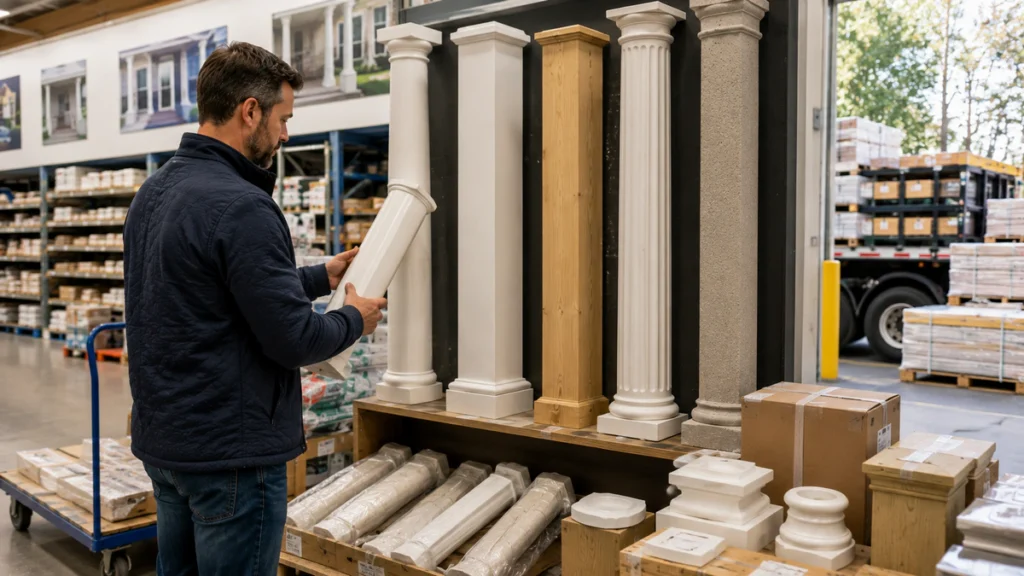
Buying-intent searches need more than design inspiration. You need to know what is actually available, how much it costs, and whether the delivery method suits a porch project.
The table below uses UK product examples checked on 2026-07-13. Prices and stock can change, so treat them as comparison points before ordering.
| Product Type | UK Example | Approx. Price Checked | Delivery Notes | Best For |
|---|---|---|---|---|
| Colonial timber-style post | Wickes Colonial Deck Post With Cap | £24 | Free Click & Collect from stores, standard delivery from £5 where available | Budget decorative posts, low canopies, and small entrance updates |
| Chamfered timber-style post | Wickes Chamfered & Beaded Deck Post | £21 | Free Click & Collect from stores, standard delivery from £5 where available | Simple porch trims and less formal homes |
| PVC or GRP column cover | Specialist UK plastics or architectural-moulding suppliers | Often quote-based | Usually courier or pallet delivery, with lead times for larger sizes | Low-maintenance wraps around existing supports |
| Stone, cast concrete, or bespoke column | Local builders’ merchants or architectural-stone suppliers | Usually quote-based | Heavy items may need kerbside or pallet delivery | Larger entrances and period-style projects |
The cheapest post is not always the cheapest finished project. Fixings, paint, base plates, plinths, caps, trims, and cutting time can add more than the post itself.
Choose the Right Porch Column Materials

Porch column materials decide how the columns look after one winter, not just on the day they are installed. Timber is easy to cut, paint, and repair, but it needs sealing and regular checks around the base.
PVC is lighter and easier to wipe clean. It works well when you want a crisp painted look without yearly sanding. GRP, or glass-reinforced plastic, can copy classical shapes with less weight than stone, and it is often used for fluted or round columns.
Stone-effect, cast concrete, and masonry columns feel more permanent, but they suit bigger homes better than small porches. They also need stronger installation planning because weight and base support matter.
Use this quick material guide:
- Timber: Best for budget projects, repainting, and simple square posts.
- PVC: Best for low-maintenance covers and clean white finishes.
- GRP: Best for traditional round, fluted, or classical column styles.
- Stone or cast concrete: Best for grand entrances and long-term permanence.
- Aluminum or steel cores: Best when strength is hidden inside a decorative wrap.
Product Details to Read Before Checkout
Product details matter because two colonial porch posts can look similar but work differently. Check the stated length, diameter, finish, warranty, and whether the listing says load bearing or decorative only.
Some decorative ranges use polyurethane, synthetic, or composite shells. Others wrap around a timber core, steel pipe, or galvanized steel pipe. A column wrap can be a neat low maintenance option when the existing structure is sound, but it should not be treated as a structural replacement unless the supplier says so.
If you are comparing wood colonial columns with PVC or GRP, ask three questions before checkout: can the product be trimmed, does it need primer before paint, and what fixings are included? Custom sizes may cost more, but they can avoid awkward gaps at the cap, base, or soffit.
Match Column Style to the House
Colonial columns for porches work best when they look connected to the roofline, window trim, door surround, and railings. A small cottage may need a plain square post, while a symmetrical house can carry a stronger classical column.
Round columns feel more formal. Square columns feel cleaner and easier to blend with modern doors. Fluted columns add depth, but they can look busy on a narrow porch.
If your home already has white fascia, sash-style windows, panelled doors, or traditional railings, colonial columns for porches will usually feel natural. If the exterior is very modern, choose a simpler square column and let the proportions do the work.
This is also where front porch curb appeal matters. Columns should frame the doorway and make the entrance clearer, not block light, crowd the steps, or make deliveries harder.
Best Styles to Shortlist Before You Buy
The most useful porch columns are not always the most ornate. Square porch posts look clean and are easy to paint, round columns feel more classical, and fluted columns add detail when the doorway is wide enough to handle it.
Column wraps are useful when the existing support is sound but unattractive. They can cover a steel or timber post without changing the main structure. Full replacement front porch columns need more care because the post, base, cap, and fixings must work together.
For a simple colonial look, shortlist these styles:
- Square white porch columns for cottages, terraces, and compact entrances.
- Round GRP columns for a formal Georgian or colonial style.
- Fluted column covers when you want more shadow and architectural detail.
- Tapered posts for a softer farmhouse or craftsman-inspired porch.
- Plain timber porch posts when budget and easy repainting matter most.
Match the column profile to the door surround before you compare colors. A slim modern door can look odd beside oversized decorative columns, while a broad entrance often needs stronger porch columns to feel balanced.
Check Planning, Safety, and Weather Exposure
Small porch changes are often simple, but UK rules can still matter when you change the size, shape, or structure of an entrance. The Planning Portal’s guidance on porch planning permission is a good source to check before a larger update.
Weather exposure is another practical issue. South-facing porches get more sun and paint fade. Exposed entrances catch more wind-driven rain. Low bases can sit in splashback from paving, which is where timber posts often fail first.
A good column should shed water and stay raised from standing moisture. Ask how the base is fixed, whether the material is pre-treated, and whether the top cap stops water sitting in joints.
How to Size Colonial Columns for Porches
Colonial columns for porches should feel strong enough for the entrance, but not so wide that they make the porch look cramped. A narrow canopy may only need slim square posts. A deep covered porch can take thicker columns with plinth blocks and caps.
Use these sizing checks before buying:
- Measure the clear height from finished floor to soffit.
- Measure the available width beside the steps or door.
- Check whether the post sits on paving, decking, concrete, or a raised plinth.
- Confirm whether you need one column, a pair, or column wraps around existing supports.
- Allow for caps, bases, and any trimming needed on site.
If you are replacing a pair, buy both columns from the same range. Small differences in profiles, caps, or paint finish are easy to spot from the street.
Install With the Whole Entrance in Mind

Columns rarely work alone. Door color, porch lighting, house numbers, planters, railings, and step materials all affect the finished look.
For stronger front porch curb appeal, pair colonial columns for porches with a simple wall light, a neat doormat, and one or two planters that do not crowd the walkway. If the porch is deep enough, a bench can make the entrance feel more useful as well as prettier.
If you are still planning the wider entrance, HouseFery’s guide to front porch ideas for curb appeal can help you decide whether columns should be the main feature or part of a broader refresh.
Maintenance Tips After Installation
Good maintenance keeps columns looking intentional rather than tired. Timber posts need the most attention because small cracks and unsealed ends can let water in.
Check these areas twice a year:
- Paint chips around the base and lower corners.
- Gaps between the cap, trim, and soffit.
- Movement where the column meets paving or decking.
- Dirt marks from rain splashback.
- Rust stains from hidden metal fixings.
- Cracks in filler, caulk, or joints.
PVC and GRP need less work, but they still benefit from gentle cleaning. Avoid harsh abrasive pads on glossy white finishes because scratches can hold dirt.
Common Buying Mistakes to Avoid
The most common mistake is choosing colonial columns for porches by appearance only. A column can look perfect online and still be wrong for your entrance height, base condition, or roof load.
Avoid these problems:
- Buying a decorative post for a structural job.
- Ignoring delivery length, pallet access, or storage space.
- Choosing timber without checking treatment and end sealing.
- Fitting a column that blocks the door swing or step width.
- Mixing different profiles on the same porch.
- Forgetting caps, bases, screws, primer, paint, and sealant.
If the column supports anything, treat the project as building work, not only decoration. That one decision prevents most expensive mistakes.
Frequently Asked Questions
What Are the Best Colonial Columns for Porches?
The best colonial columns for porches are the ones that fit the porch height, suit the house style, and handle the required load. Timber is affordable, PVC is low maintenance, GRP gives a classic column look, and stone or cast concrete suits larger entrances.
Are Colonial Porch Columns Load-Bearing?
Some are load-bearing, and some are decorative covers. If a column sits under a canopy, roof, or upper structure, assume it may be structural until a builder confirms otherwise.
What Is the Cheapest Way to Add Porch Columns?
The cheapest route is usually a treated timber or timber-style post with a simple cap and painted finish. Wickes-style deck posts can be budget-friendly, but they may not suit every porch height or structural need.
What Material Lasts Longest Outside?
GRP, PVC, stone, and properly detailed masonry usually need less repainting than timber. Timber can still last well if it is treated, sealed, raised from standing water, and repainted before cracks open.
Do I Need Planning Permission for Porch Columns?
Small like-for-like updates may not need permission, but larger porch changes can. Check UK porch planning guidance and local rules before changing the footprint, height, or structure.
Final Thoughts
Colonial columns for porches are worth buying carefully because they affect structure, style, and first impressions at the same time. Start with measurements, compare porch column materials, check retailer prices and delivery, then choose columns that improve front porch curb appeal without creating maintenance or installation problems.