A lanai should feel like the easiest room in the house to enjoy. The right surface can make it cooler underfoot, safer after rain, and more inviting for morning coffee, family meals, or quiet evenings outside.
These lanai floor ideas focus on outdoor flooring that looks good and handles real weather. You will also see where slip-resistant tile, sealed concrete, pavers, wood-look finishes, and moisture-resistant materials make the most sense.
Quick Answer
The best lanai floor ideas use durable, moisture-resistant, and slip-resistant materials that match your climate and how you use the space. For most homes, textured porcelain tile, sealed concrete, composite decking, natural stone pavers, or outdoor-rated luxury vinyl are the safest choices. In humid, rainy, or coastal areas, choose a floor that drains well, dries quickly, and stays comfortable under bare feet.
Start With Climate, Drainage, and Daily Use
A beautiful lanai floor can fail quickly if it ignores the local climate. Sun, humidity, wind-driven rain, pool splash, and tracked-in sand all affect how the surface wears.
Before you choose a finish, decide what the floor must survive every week. A screened lanai in Florida has different needs than a covered porch in a dry inland climate. A poolside lanai needs more grip. A dining lanai needs easy cleanup. A quiet reading space can prioritize warmth and texture.
The U.S. Environmental Protection Agency advises using moisture-tolerant materials that can dry quickly in areas that may get wet. That guidance fits a lanai well because even a covered space can collect damp air, blown rain, and condensation.
Use this simple check before buying anything:
- Does rain reach the floor during storms?
- Will people walk through with wet feet from a pool or garden?
- Does the surface get direct afternoon sun?
- Will furniture be moved often?
- Do you want a floor that needs sealing, or one that only needs washing?
Once those answers are clear, the best lanai floor ideas become much easier to narrow down. In warm communities such as The Villages, Florida, an enclosed lanai may need extra attention to airflow, slope, and mold and mildew prevention because damp air can linger after storms.
Compare the Best Lanai Flooring Options
There is no single best floor for every lanai, and the most useful lanai floor ideas compare outdoor flooring by real use. The strongest choice is the one that balances grip, cleaning, heat, style, and budget.
| Material | Best For | Main Advantage | Watch Out For |
|---|---|---|---|
| Textured Porcelain Tile | Wet, humid, and stylish lanais | Durable, easy to clean, and available in many looks | Glossy tile can be slippery, so choose textured outdoor-rated tile |
| Sealed Concrete | Modern, budget-conscious spaces | Strong, flexible, and easy to stain or stamp | Needs the right sealer and texture for grip |
| Composite Decking | Warm wood-look lanais | Low maintenance and resistant to rot | Can heat up in direct sun depending on color |
| Natural Stone Pavers | Garden-connected or poolside lanais | Organic texture and strong outdoor character | Some stone needs sealing and careful cleaning |
| Outdoor Luxury Vinyl | Covered, enclosed, low-traffic lanais | Comfortable underfoot and water resistant | Must be rated for the exact exposure conditions |
Use Textured Porcelain Tile for a Clean, Coastal Look
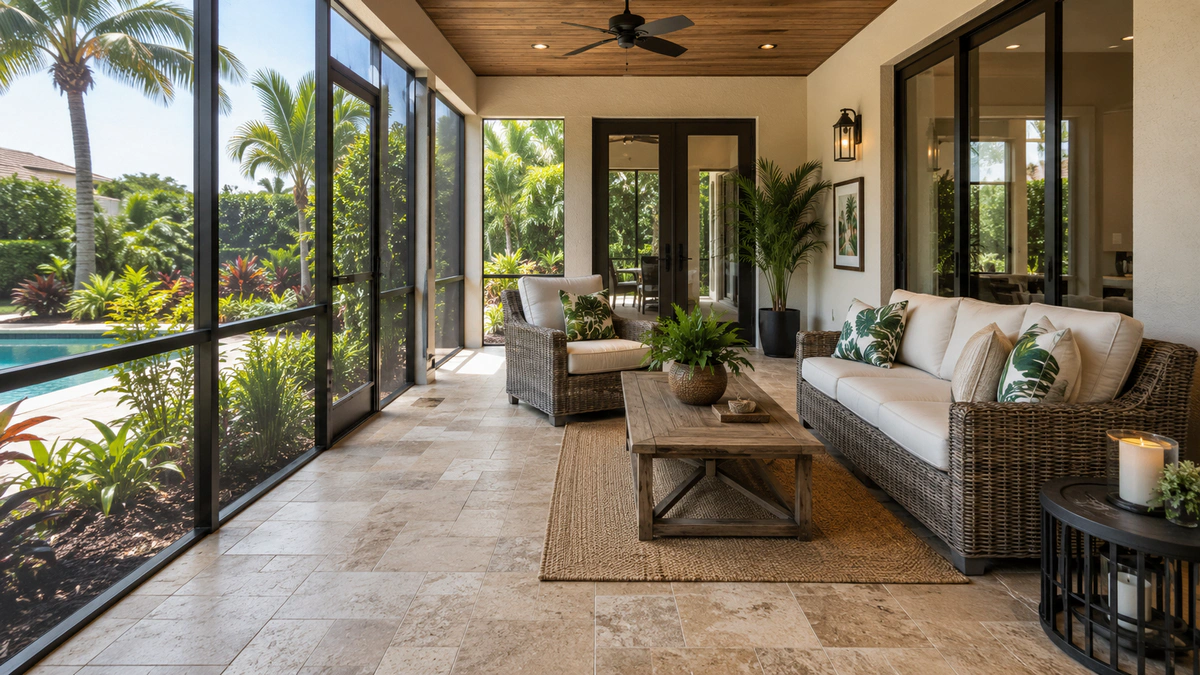
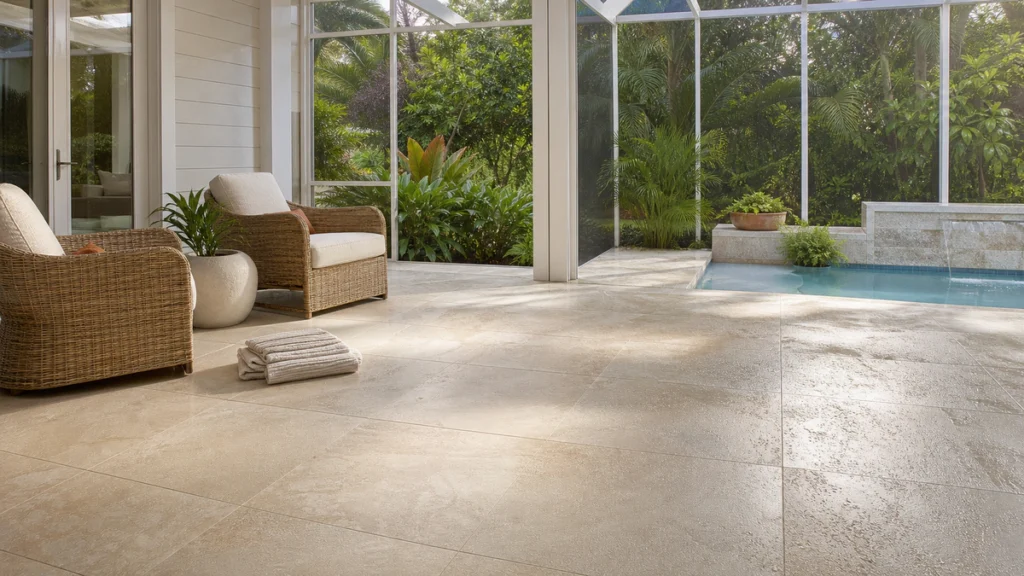
Porcelain tile is one of the most reliable lanai floor ideas because it resists moisture, stains, and everyday dirt. It is also a strong outdoor flooring option when you choose the right texture. It also gives you a wide design range, from limestone-look tile to wood-look planks and patterned floor tiles.
The key is texture, not shine. A glossy tile may look polished indoors but can become risky on a damp lanai, while slip-resistant tile gives better traction after rain. Look for outdoor-rated tile with a grippy surface, especially if the lanai is near a pool, garden hose, or open screens.
This is also the right place to improve the old source link with better context. If you are collecting visual references, material notes, or a beautiful lanai floor planning resource, compare those ideas against your real climate before buying. For broader home inspiration, HouseFery also shares outdoor home and renovation ideas that can help you match the floor to the rest of the property.
Tile works especially well when you want a bright lanai that feels finished, tidy, and easy to wash. Choose light beige, soft grey, warm sand, or muted terracotta if the space gets a lot of sun.
Try Sealed Concrete for a Modern, Low-Maintenance Floor
Sealed concrete is practical, affordable, and surprisingly stylish, especially when your lanai floor ideas call for simple outdoor flooring. It can be stained, scored, stamped, or lightly textured so the floor looks intentional rather than plain.
Concrete is best when you want one continuous surface that is easy to sweep and rinse. It suits modern homes, simple patio furniture, and lanais where durability matters more than a decorative pattern.
The finish matters. A smooth sealed slab may be easy to clean, but it can feel slick when wet. Ask for a broom finish, light texture, stamped concrete, or a non-slip additive in the sealer. If the floor already exists, a concrete resurfacing coating can refresh a concrete patio without replacing the whole slab.
Concrete is also useful if your lanai connects to a walkway, driveway, or pool deck. Keeping the surface consistent makes the outdoor flooring feel larger and calmer.
Choose Composite Decking for Warmth Without Constant Staining
Natural wood looks warm and relaxed, but it is not always the easiest lanai flooring choice if you need slip-resistant tile levels of grip with less upkeep. Humidity, pests, and repeated wetting can cause problems if the boards are not sealed and maintained.
Composite decking gives you a similar wood-look floor with less upkeep. It resists rot better than untreated wood, does not need regular staining, and works well in casual outdoor rooms.
Composite is a good fit when comfort and low maintenance matter more than a stone or tile look. It can soften a lanai that has hard walls, metal furniture, or a strong concrete base.
Use lighter boards if the floor receives direct sunlight. Dark composite can get hot, especially in warm climates. Also check the gap and drainage requirements during installation, because trapped water below the boards can shorten the life of the substructure.
Bring in Pavers or Natural Stone for a Garden Feel
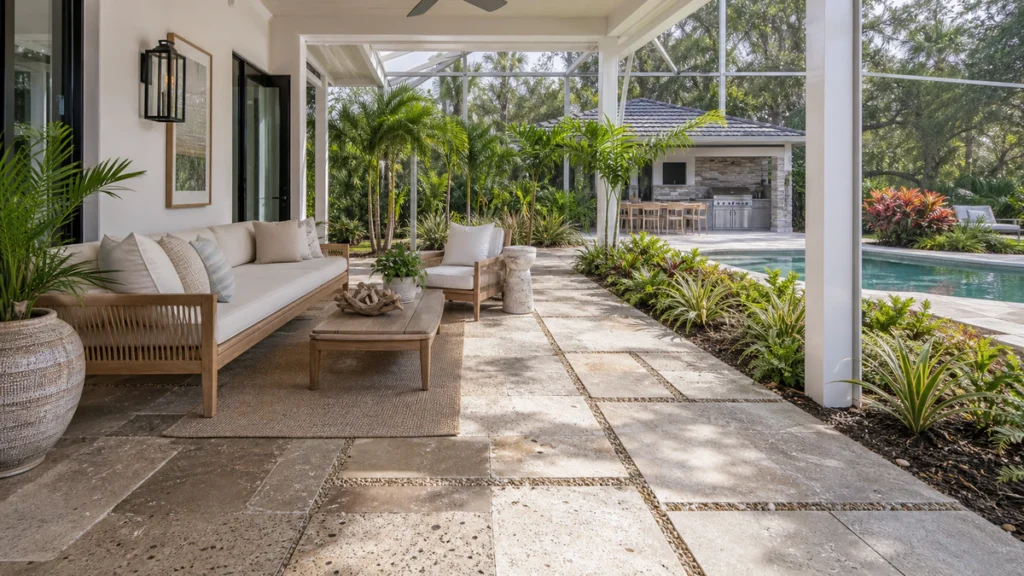
Pavers and natural stone are strong choices when the lanai opens to a yard, garden, or pool. They make the transition from house to landscape feel more natural and can transform a plain outdoor space into a cozy outdoor living space.
Stone works best when you want texture, drainage, and an outdoor character that does not feel too polished. Travertine, slate-look porcelain pavers, concrete pavers, and textured stone can all work, depending on your budget and climate.
For a softer look, mix large pavers with small gravel joints or planting beds around the edge. This keeps the lanai connected to nature without letting soil and leaves take over the seating area.
If your lanai leads toward a pool, a covered kitchen, or a shade structure, it can also connect naturally to poolside pavilion ideas for outdoor living. Paving stones can blend the zones, and that internal link helps readers move from the floor decision to the wider backyard plan.
Add Comfort With Outdoor Rugs, Borders, and Pattern
You do not always need a dramatic floor replacement to make a lanai feel new. Sometimes the best lanai floor ideas are finishing details layered over a strong base.
An outdoor rug can define a sitting area, hide minor surface marks, and add color without a permanent change. Choose a rug made for exterior use so it drains and dries quickly. Avoid plush indoor carpet, but consider outdoor carpet tiles if the product is waterproof, synthetic, and rated for outdoor use.
Borders and patterns can make simple flooring look custom. A tile border, herringbone paver layout, painted concrete edge, or two-tone composite decking pattern can give the lanai structure.
Keep the pattern calm if the lanai is small. Large-format tile, wide decking boards, and simple paver layouts make a compact space feel wider. Busy patterns work better when the area is open and lightly furnished.
Match the Floor to Your Lanai Style
The right material should feel connected to the rest of the house, so compare lanai floor ideas with nearby outdoor flooring, doors, trim, and furniture. A lanai floor that clashes with the interior can make the transition feel awkward.
For a coastal home, try pale porcelain tile, shell-toned pavers, or weathered grey composite. For a farmhouse look, choose warm concrete, wood-look tile, or muted brick pavers. For a modern space, use large-format tile, smooth concrete, or a narrow color palette.
Let the floor support the furniture, plants, and view rather than compete with them. If your furniture is colorful, keep the floor quiet. If the furniture is neutral, the floor can carry more texture.
Also think about barefoot comfort. Slip-resistant tile and stone can be safe, but some surfaces feel rough. Test samples with dry and damp feet if you can, because even the best tile flooring can feel slippery when wet if the texture is wrong.
Plan Maintenance Before You Commit
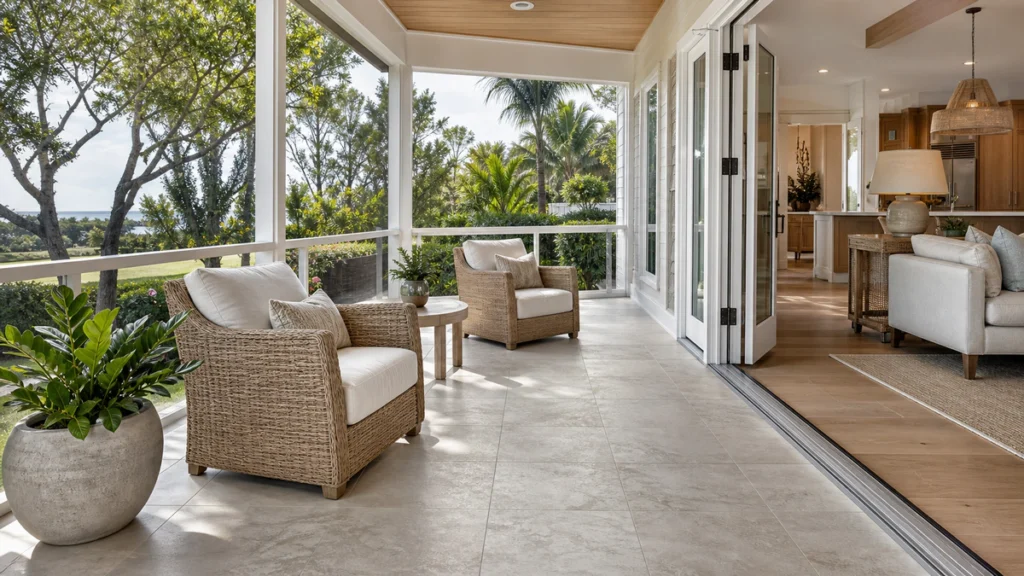
A lanai floor should not become a chore. Before you choose the material, check how often it needs sealing, whether it can handle pressure washing, and what cleaners are safe to use.
Low-maintenance flooring still needs basic care. Sweep leaves and grit often, rinse pollen before it sticks, and clean spills quickly. Dirt trapped under furniture legs can scratch many surfaces.
Porcelain tile usually needs the least effort because it is easy to clean and maintain. Sealed concrete may need resealing. Stone can need pH-neutral cleaners and grout care. Composite decking should be washed according to the manufacturer’s directions. Outdoor luxury vinyl should only be used where the flooring material rating matches the exposure and foot traffic.
If you live in a humid area, pay attention to airflow. Furniture with open legs, breathable rugs, and clear drainage paths help the floor dry faster after rain.
Frequently Asked Questions
What Is the Best Flooring for a Lanai?
The best flooring for a lanai is usually textured porcelain tile, sealed concrete, composite decking, or natural stone pavers. The right choice depends on moisture, sun exposure, slip resistance, maintenance, and the style of your home.
Can You Use Indoor Flooring on a Lanai?
Indoor flooring is usually a poor choice for a lanai because it may not handle humidity, rain, temperature changes, or UV exposure. Always choose outdoor flooring or a product specifically rated for covered exterior spaces.
Is Tile Too Slippery for a Lanai Floor?
Tile can be too slippery if it is glossy or made for indoor use. Slip-resistant tile with an outdoor texture is a much better option, especially in wet climates or near pools.
How Do You Make a Lanai Floor Look Better Without Replacing It?
You can clean and reseal the surface, add an outdoor rug, paint or stain concrete, use planters around the edge, or add furniture that suits the floor color. Small changes can make the whole lanai feel more finished.
What Lanai Floor Color Is Best?
Light neutral colors such as sand, beige, soft grey, and warm stone are usually best. They reflect heat, match many furniture styles, and make the lanai feel open.
Final Thoughts
The best lanai floor ideas are practical first and pretty second. Start with weather, drainage, and how you use the space, then choose outdoor flooring that supports your style. With slip-resistant tile, sealed concrete, composite decking, or natural stone, your lanai floor ideas can become safer, cleaner, and more comfortable for everyday outdoor living.