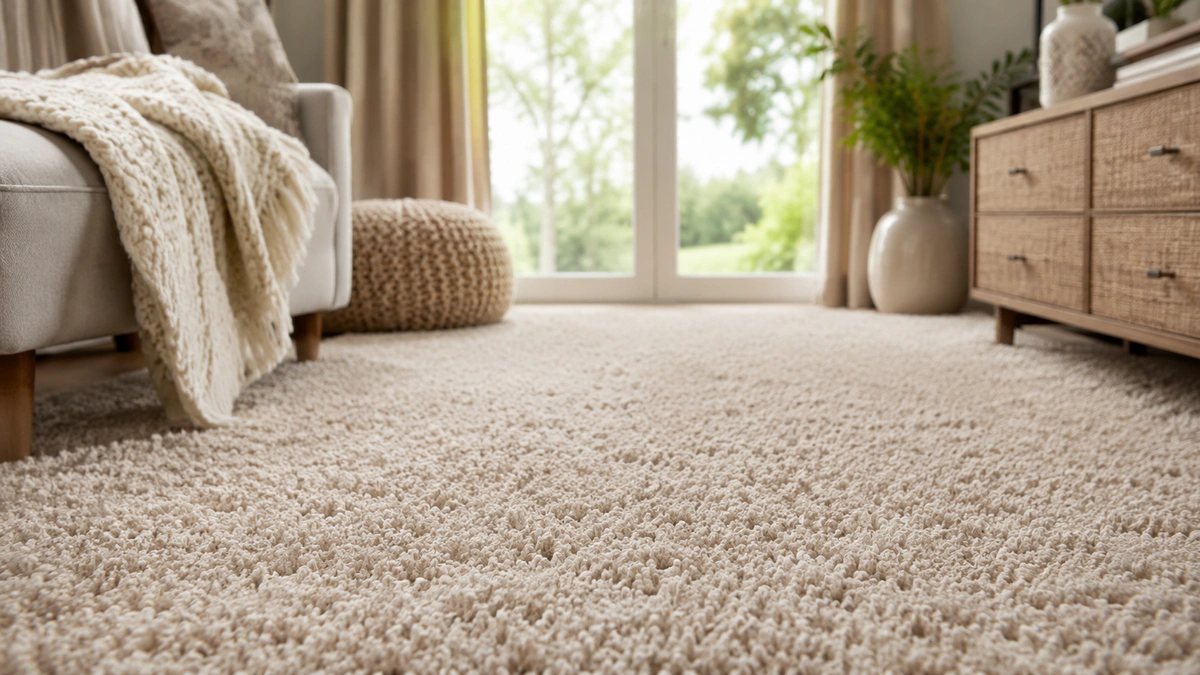
Pile carpet can make a room feel warmer, softer, and more finished, but the best choice depends on carpet materials, room use, and how much wear the floor gets. A pile carpet sample also needs to feel stable when you press it by hand.
If you want comfort without regret, look past colour first. A good carpet should suit high-traffic areas, daily cleaning, furniture weight, busy feet, and the way your family uses the room.
Quick Answer
The best pile carpet for most homes is a dense cut pile or cut and loop carpet made from wool blend, nylon, or strong polyester. Choose a shorter carpet pile for halls, stairs, pets, and busy family spaces. Choose medium pile for living rooms, and keep high pile carpet, Saxony, or plush carpet for bedrooms and quieter rooms where softness matters more than heavy wear.
Start With the Room Before You Choose
Start with the room, not the showroom sample. I like to ask how the space is used, who walks through it, whether shoes come in from outside, and how often the carpet will be vacuumed.
The Carpet and Rug Institute carpet selection guidance recommends checking traffic level, sunlight, outdoor access, pets, older users, and heated flooring before buying. That makes sense because the wrong type of carpet can flatten, stain, or feel awkward long before the style looks dated.
Busy rooms need tighter fibres and a firmer surface. Quiet rooms can take more softness, more depth, and a smoother feel underfoot.
For more room ideas, use the HouseFery home improvement and decor guides before you settle on colour. If the floor covering sits beside dark furniture, the guide to brown sofa rug colours for a balanced living room can help you judge contrast, warmth, and pattern.
Compare the Main Carpet Pile Types
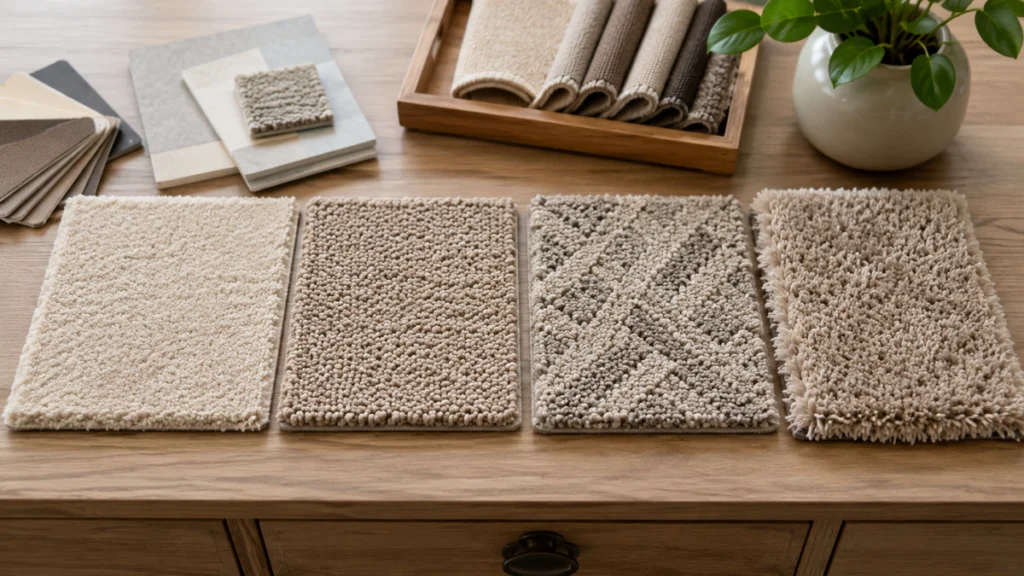
Understanding carpet pile makes the buying process easier. The main pile options are cut pile, loop pile, and cut and loop pile carpets. Each one gives a different balance of comfort, strength, and appearance.
| Pile Type | Best For | Main Strength | Watch Out For |
|---|---|---|---|
| Cut Pile Carpet | Living rooms and bedrooms | Soft, warm, and comfortable | Can show footprints |
| Loop Pile Carpet | Halls, stairs, offices, and family spaces | Firm and durable carpet surface | Loops may snag with claws |
| Cut And Loop | Patterned rooms and practical lounges | Texture hides light marks | Raised areas can wear over time |
| High Pile | Bedrooms and low-use spaces | Soft, cosy, and warm | Harder to clean in busy rooms |
Cut pile has yarn tips cut open. Textured, Saxony, velvet, and frieze carpet sit in this group. Types of cut pile vary from smooth and formal to twisted and casual.
Loop pile keeps the yarn in loops. Level loop and Berber carpet feel firmer, while multi-level loop creates a pattern with different loop heights. Multi-level loop carpets are useful when you want detail without bold colour.
A cut and loop surface mixes both methods. It can create squares, waves, chevrons, and soft pattern. Interior magazines such as House & Garden decorating inspiration show how texture can make a calm room feel layered.
Match Fibre, Backing, and Durability
A beautiful pile carpet still needs the right construction. Fibre, twist, density, carpet backing, and underlay all affect how it feels and how well it lasts.
Wool gives warmth, spring, and a natural finish. A wool blend can be a strong choice in living rooms because it balances comfort with shape recovery. Nylon is a tough synthetic fibre for stairs, landings, and family spaces.
Polyester can give clear colour and good stain resistance, especially when solution-dyed. Polypropylene can suit tighter budgets and spare rooms, but it may flatten faster on main walking routes.
Carpet fibers matter, but density matters too. Bend a sample backwards. If you can see a lot of backing, the pile may not be as full as it first looked.
Underlay also changes the feel of your carpet. A good underlay can make a medium pile carpet feel warmer and quieter. A weak one can make even the best carpet feel thin.
Choose Pile Height by Room
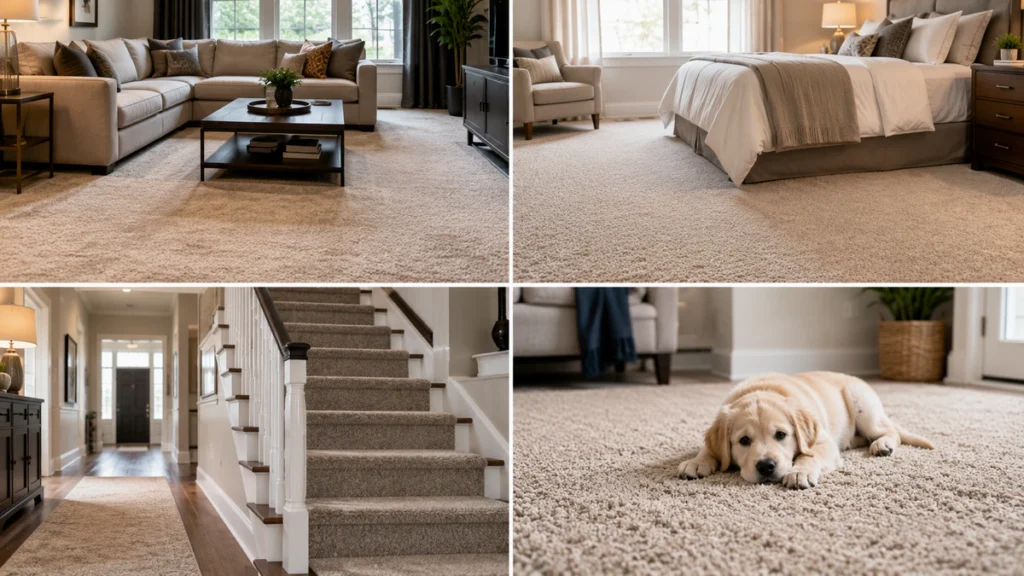
The height of the carpet pile changes cleaning, comfort, door clearance, and furniture marks. Low pile carpet is best when you need easy vacuuming, clear door swing, and a stable surface.
Living rooms usually need balance. A medium height works well when you want comfort but still need practical cleaning. Bedrooms can take more depth because they face less daily traffic.
Stairs and halls need care. A shorter, denser surface is ideal for high-traffic areas because it gives better grip and keeps its shape. Avoid a shag carpet on stairs because deep yarn can make the tread edge feel unclear.
For pets, choose a dense surface with good stain resistance. A loop carpet can last well, but claws may catch on some loops, so test the sample before you buy.
Use Colour and Pattern With the Pile
Colour and pile work together. Cream, oatmeal, beige, and soft grey open a room and suit many flooring options. Brown, olive, navy, charcoal, and rust can feel richer and hide light soil.
Pattern is useful when the room needs forgiveness. Flecks, stripes, small geometrics, and sculptured texture can hide crumbs and footprint marks better than one flat shade.
Traditional rooms suit floral motifs, borders, and warmer tones. Modern rooms suit cleaner carpet styles, calm neutrals, and geometric pattern. If you want the perfect carpet for a whole room, take samples home and view them in morning, afternoon, and lamp light.
Know the Small Construction Terms
A carpet label can feel confusing, but the key terms are simple once you connect them to daily use. Carpet types describe construction, fibre describes the material, and backing describes the base that holds the yarn in place.
Different types of carpet pile include tufted, woven carpet, bonded, looped, and sheared styles. A high-pile carpet feels deeper, while a high loop can create a raised pattern. These details are not just sales language. They affect cleaning, comfort, and how the surface handles pressure.
Think of the pile of a carpet as the touchable top layer. The pile explained in plain English is this: shorter and tighter usually means easier care, while deeper and softer usually means more comfort. Common carpet pile types give you a trade-off, not a single winner.
If you are choosing the perfect carpet for a whole home, compare samples by room and note how each one springs back after you press it. New carpet can look flawless on day one, but the right construction is what keeps it looking good after daily use.
Check Care Before You Buy
Every type of carpet pile needs routine care. Vacuum busy areas more than quiet rooms, blot spills fast, and avoid scrubbing because rough action can damage the fibres of the carpet.
Maintenance should match your lifestyle. Plush finishes look elegant, but they show footprints and vacuum marks. Textured surfaces and level loop carpets are more forgiving in daily life.
Use mats at entrances to stop grit from cutting into the yarn. Rotate furniture where you can, use cups under heavy legs, and manage strong sunlight with curtains or blinds.
Professional cleaning every 12 to 18 months can protect appearance, but always check the maker’s care advice first. Wool, nylon, polyester, and polypropylene may need different products.
Final Thoughts
Choosing the right carpet pile is less about chasing the deepest sample and more about matching comfort, fibre, room use, and cleaning. A carpet should make your home feel softer without becoming hard work.
For most homes, choose dense cut pile for comfort, loop pile for high traffic areas, and a patterned cut and loop surface when you want texture with practical wear. Match pile carpet to carpet materials, room use, and high-traffic areas, then test each pile carpet sample in the room before buying.
Frequently Asked Questions
What Is a Pile Carpet?
A pile carpet has yarn rising from the backing. The yarn may be cut, looped, or mixed to create different types of carpet available for different rooms.
Which Carpet Pile Is Most Durable?
A dense shorter surface, level loop, or textured cut pile is usually most durable. It holds shape well and suits families, pets, and regular foot traffic.
Is Cut Pile or Loop Pile Better?
Cut pile is better for softness. Loop pile is better for firmness and durability. Cut and loop gives pattern and sits between both different pile types.
How Do I Know If a Sample Is Good Quality?
Press it, bend it, and look at the backing. A better sample feels firm, springs back, and shows less backing through the yarn.
What Is the Best Carpet for Bedrooms?
A softer Saxony, frieze, or plush finish can work well in bedrooms because the room gets lighter use. Choose the colour and fibre after testing samples at home.