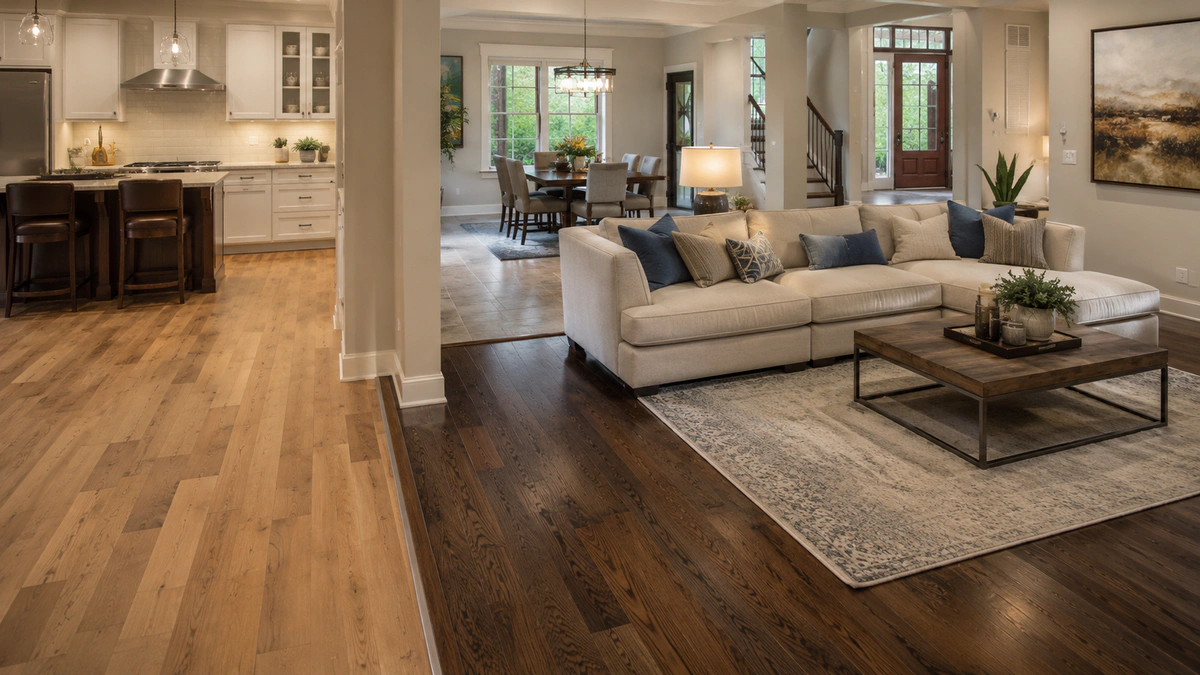
Mismatched wood floors can add warmth, history, and personality when the design is planned instead of accidental. The goal is not to make every board disappear. The goal is to create interior design flow with color, scale, texture, and clear wood floor transitions.
If one room has red oak, another has white oak, and a hallway has dark wood, you can still make the whole home feel calm. Use the ideas below to balance mismatched wood floors with practical layout choices, better decorating decisions, and a simple plan for each room.
Quick Answer
Mismatched wood floors work best when you repeat one shared detail across the home. Match the undertones, keep transitions clean, use rugs to soften breaks, repeat similar wood furniture, and choose wall colors that connect the different floors. A perfect match is less important than making each change look deliberate.
Start With Undertones, Not Exact Matches
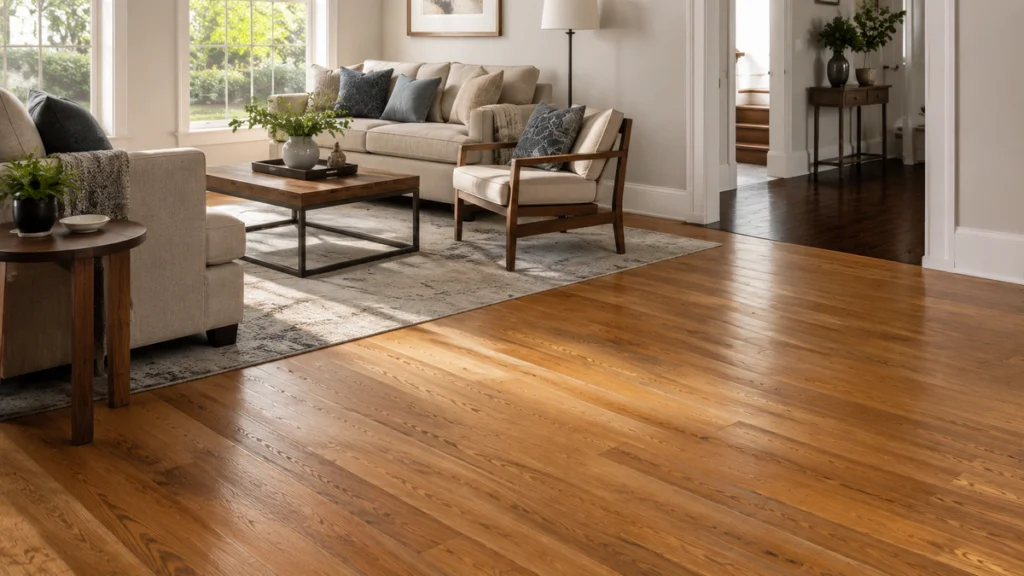
The first step is to study the color tone of every floor. Most wood floors lean warm, cool, or neutral. Warm floors may show honey, amber, orange, or red. Cool floors may show gray, ash, or muted brown. Neutral floors sit between the two and are usually easier to blend.
When the undertones agree, different wood can still feel related. Red oak beside dark wood flooring may look busy if one is glossy orange and the other is flat gray. Red oak beside walnut can look richer if both carry a warm color.
Look at the floors in natural light and evening light before choosing stain colors, rugs, or furniture. If one wood floor changes strongly through the day, use neutral walls and simple textiles so the flooring look stays calm.
Use Clean Wood Floor Transitions Between Rooms
A transition strip is not just a practical edge. It tells the eye where one room ends and another begins. That matters when mismatched wood floors meet in a doorway, hall, kitchen, or family room.
For broader room inspiration, HouseFery has practical home improvement and decor ideas that can help you connect floors with walls, furniture, and finishing details. For style reference, House & Garden interior design inspiration is useful when you want to see how layered materials can still feel elegant.
Use a threshold, border plank, stone saddle, or metal profile when the height or direction changes. If the floors are close in height, a flush wood saddle often looks best. If the tones clash, choose a third material that feels intentional, such as black metal, limestone, or a painted threshold. This is one of the simplest ways to make mismatched wood floors feel designed.
- Use straight transitions in doorways for a tidy break.
- Use a border plank when the floor direction changes.
- Use stone or tile where kitchen floors meet living spaces.
- Use a rug where an open-plan room needs softer separation.
Repeat One Wood Tone in Furniture and Trim
Wood furniture can make mismatched wood floors feel planned. Choose one repeated wood tone and use it in at least two places. A walnut console, a dark picture frame, and a dark chair leg can help dark floors go together with lighter wood flooring nearby.
The furniture and floors do not need to match wood species. They need a shared visual rhythm. If your kitchen floors are pale and the dining room is darker, repeat the pale tone in a sideboard, shelf, or woven chair seat.
Wood cabinets also matter. If the cabinets are already strong in color, do not add another loud type of wood. Let the cabinets act as the anchor, then keep other wood finishes quieter so mismatched wood floors do not have to carry the whole room.
Choose a Coordinating Stain Plan
When you can refinish part of the home, use stain to reduce mismatched wood floors instead of hiding them completely. Test stain samples on real wood or spare planks. A stain that looks balanced on white oak may look redder on existing hardwood or darker on engineered wood.
The USDA Forest Products Laboratory explains in its wood moisture and physical properties guidance that wood changes with moisture and material structure. That is why real wood, solid hardwood, and engineered wood can age and move differently. It is also why a flooring professional should check moisture before new flooring is added beside original wood.
If a perfect hardwood match is impossible, go lighter or darker on purpose. Trying to match a slightly aged floor often creates a near miss. A clear contrast usually makes mismatched wood floors look more confident than a close but wrong match.
Balance Color With Rugs, Carpet, and Textiles
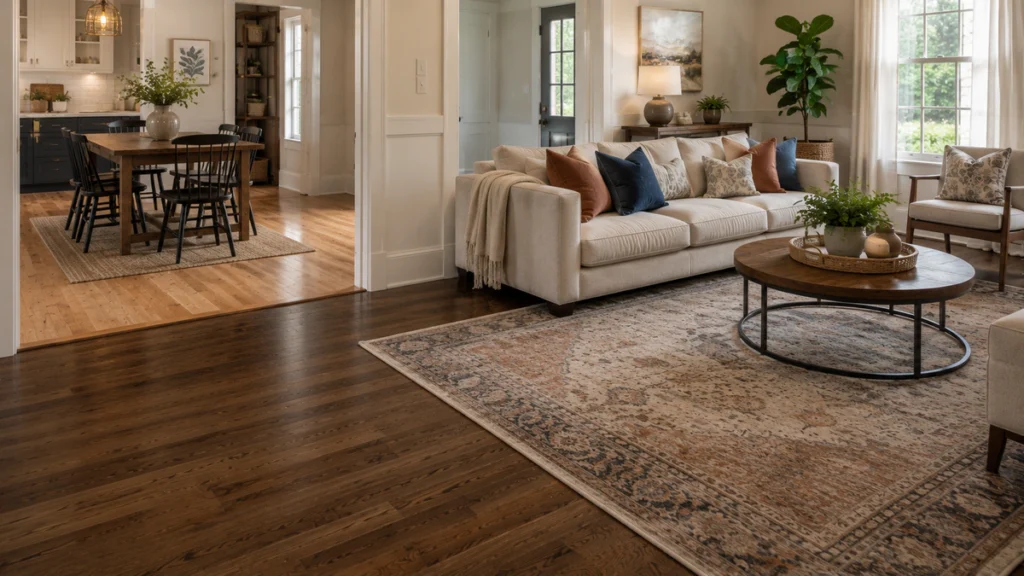
Rugs are the easiest way to control how mismatched wood floors read in a room. A large rug can cover the visual break between different colors of hardwood floors, while still letting the border show enough to feel intentional.
Use rugs with both floor colors in the pattern. If one room has dark floors and the next has light wood flooring, choose a rug with tan, brown, cream, or charcoal. That creates a bridge across mismatched wood floors without repainting or replacing the floor.
For rooms that need more softness underfoot, these pile carpet designs for elegant interiors can help you compare texture, comfort, and visual weight before you choose rugs or carpet or hardwood combinations.
Try Pattern and Plank Direction Carefully
Pattern can make a different floor look deliberate. A herringbone entry, a straight-plank hallway, and a wide-plank living room can work together when the color palette is controlled. With mismatched wood floors, the mistake is changing color, pattern, gloss, and plank width all at once.
Limit each transition to one main difference whenever possible. If the plank direction changes, keep the finish similar. If the color changes, keep the plank flooring direction simple. This keeps the eye from reading every room to room change as a mistake.
| Flooring Issue | Best Design Fix | Why It Works |
|---|---|---|
| Warm floor beside cool floor | Add neutral rugs, white walls, and black accents | Neutral pieces calm the temperature clash |
| Dark wood beside pale wood | Repeat the dark tone in furniture and frames | The contrast feels intentional |
| Different floor heights | Use a threshold or reducer strip | The transition becomes safe and finished |
| Glossy floor beside matte floor | Reduce shine with rugs and softer lighting | The surfaces compete less |
Use Walls and Paint to Create a Cohesive Look
Wall color can either fight mismatched wood floors or pull them together. Warm white, soft greige, mushroom, clay, sage, and muted blue often work because they sit comfortably with several wood colors.
If the floor throughout the house changes often, keep the trim consistent. One trim color creates a clean frame around each room. It also helps the rest of the house feel connected even when the flooring is different.
Avoid choosing paint from one room only. Carry samples through the entire house and check them beside each wood floor. The best color will not be perfect in every room, but it should avoid making any floor look yellow, pink, or dull.
Know When to Replace, Refinish, or Embrace the Difference
Not every mismatch needs fixing. Some mismatched wood floors tell a good story, especially in older homes with original wood. Others look distracting because the finish, height, or layout was patched without a plan.
Replace flooring when the material is damaged, uneven, or unsafe. Refinish when the wood species is compatible and the color can be brought closer. Embrace mismatched wood floors when they are solid, attractive, and easy to connect with furniture, rugs, and paint.
Ask three questions before spending money:
- Is the floor structurally sound?
- Is the mismatch mostly color, height, pattern, or wear?
- Can decor solve the problem before new wood is installed?
Frequently Asked Questions
Can You Have Different Wood Floors in Different Rooms?
Yes. Different wood floors can work well in different rooms if the transitions are clean and at least one visual detail repeats. Use similar undertones, matching trim, repeated furniture finishes, or rugs to make mismatched wood floors create a cohesive look throughout.
Should All Wood Floors Match Throughout the House?
No. Matching hardwood floors can look calm, but they are not required. Many homes look more layered when each room has its own character. The key is to avoid random changes that look unfinished.
How Do You Match New Wood to Existing Wood?
Start with species, plank width, thickness, grain, and finish. Then test stain samples beside the existing stain in the room where the new wood will sit. If the match is not close, choose a clear contrast instead of a weak near match.
Are Mismatched Floors Bad for Resale?
They can hurt resale if they look like poor repairs. They can help if they look intentional, well maintained, and suited to the home. Buyers usually respond better to clean transitions, consistent trim, and floors that feel cared for.
Final Thoughts
Mismatched wood floors can look beautiful when you treat them as a design feature, not a flaw. Focus on undertones, wood floor transitions, repeated furniture tones, and interior design flow, and your home can feel collected, practical, and warm without forcing every wood floor to match.