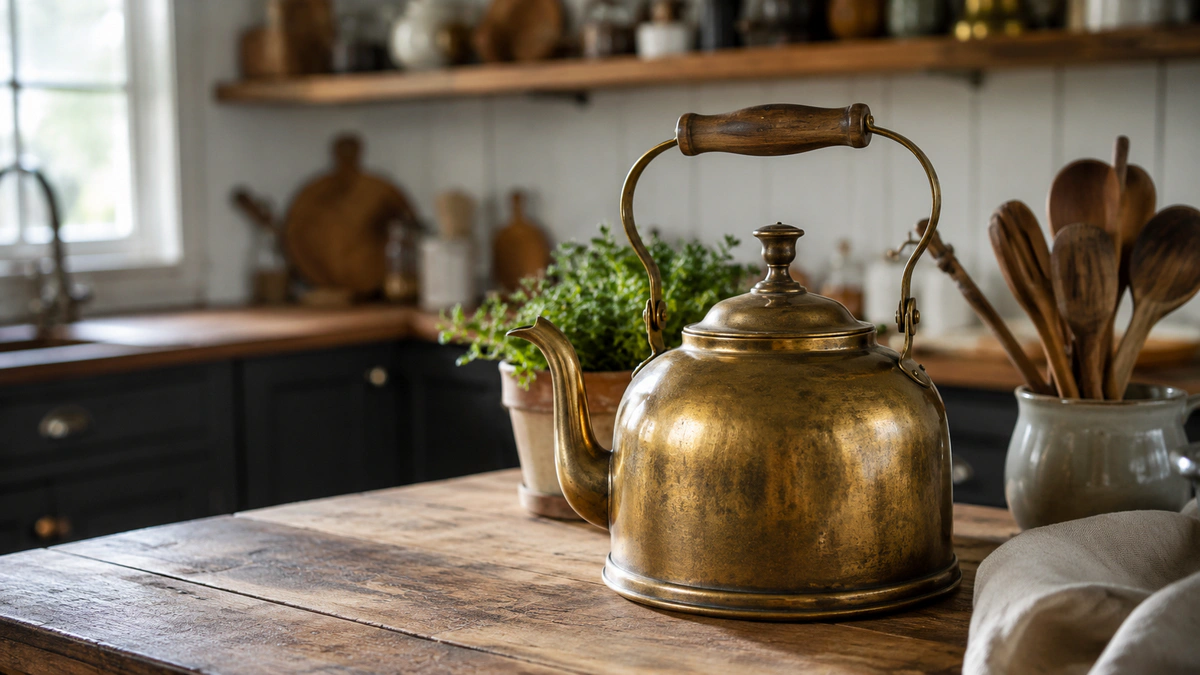
Vintage brass kettles are back in style because they bring warmth, history, and practical character to modern kitchens. They work as antique kitchen decor, but they also need smart buying checks, careful cleaning, and basic brass kettle safety before anyone uses them near food or heat.
The appeal is simple: vintage brass kettles look collected rather than mass-produced. They add a golden accent to shelves, coffee stations, and dining rooms while giving homeowners a reason to think about materials, patina, craftsmanship, and safe display.
Quick Answer
Vintage brass kettles are popular again because they combine old-world craft, warm metal color, sustainable decorating, and useful kitchen styling. The best pieces have solid brass construction, a stable handle, a fitted lid, clean seams, and honest patina. For safety, treat most antique kettles as decorative unless the interior is professionally checked for food contact.
They suit farmhouse, traditional, boho, cottage, and layered modern interiors. A good brass kettle can sit on open shelving, beside coffee tools, near cookbooks, or on a dining console without needing to function like new cookware.
Why Brass Looks Right in Modern Kitchens
Vintage brass kettles work because brass adds color without feeling loud. Stainless steel can look cold, black hardware can feel heavy, and polished chrome can disappear. Brass gives a kitchen a warmer middle ground.
Aged brass also softens bright kitchens. One kettle on a white shelf can make a plain wall feel more lived in. The tone pairs well with wood cutting boards, cream cabinets, stone countertops, painted furniture, and textured linens.
This is why brass kettles often show up in well-edited interiors from House & Garden decorating inspiration. They are small enough to move, but strong enough visually to act like a focal point.
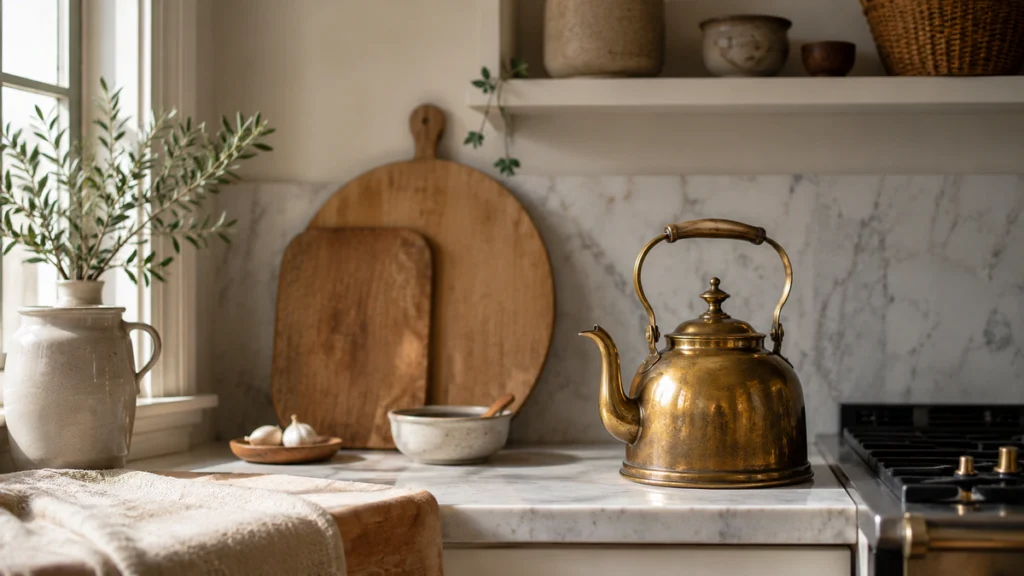
The History Gives Each Kettle More Character
A brass kettle is not just another decorative object. Brass is an alloy of copper and zinc, and it has been used for domestic vessels, trade goods, hardware, and ornaments for centuries. The Smithsonian records a historic brass kettle in its American history collection, which shows how these pieces moved through homes, trade, and daily life.
That background matters when you are choosing antique kitchen decor. A 19th century kettle, a Victorian tea kettle, an Indian brass teapot, or a heavy brass pot kettle may show hammer marks, old repairs, dark patina, or a hand-shaped spout.
Those details make vintage brass kettles feel personal. A new accessory can fill a gap, but an antique brass piece can start a conversation.
Style Benefits and Buying Checks
Vintage brass kettles are easy to style, but they are not all equal. Before you buy, check the condition, weight, seams, handle, lid, spout, base, and interior. A decorative kettle can have age marks, but it should not be unstable, split, or sharp.
| What to Check | Why It Matters | Best Sign |
|---|---|---|
| Handle | Shows whether the kettle can be moved safely | Firm, secure, and not loose at the mounts |
| Interior | Affects brass kettle safety and display use | Clean, dry, and not flaking or powdery |
| Base | Reveals old repairs or heat damage | Flat, stable, and free from open cracks |
| Patina | Adds antique character without hiding damage | Even color with no green residue near seams |
| Size | Controls where it can be displayed | Proportional to the shelf, island, or mantel |
Shopping online also means checking measurements, return policies, and shipping notes. Ask for photos of the inside, the underside, and the handle joints before you pay for an antique brass kettle.
If you shop from marketplaces, compare the measurement line, seller photos, return window, and free shipping terms before you decide. A careful buyer should also notice whether the listing describes a brass tea kettle, a coffee pot, a stovetop tea kettle, or a decorative home decor accent, because each one has a different purpose.
The safest buy is a piece you can display proudly without pretending it is modern cookware.
How to Use Them Without Forcing the Look
Vintage brass kettles look best when they have a job in the room. That job can be visual, not functional. Use one to hold dried stems, sit beside a stack of plates, anchor a coffee tray, or break up a row of identical cabinets.
If you are planning a wider room refresh, pair the kettle with practical choices from our guide to kitchen renovation ideas that improve storage and daily use. For smaller styling moves, the broader HouseFery home decor guides can help you connect old metal, wood, color, and texture without making the room feel staged.
Good placements include:
- Open shelves with cookbooks, pottery, and linen towels.
- A coffee station with mugs, beans, and a small tray.
- A dining console with candles and framed art.
- A pantry shelf where warm metal balances jars and baskets.
- A mantel or sideboard when the kettle is purely decorative.
Leave space around the kettle so the shape, spout, lid, and patina can be seen. Crowding it with too many items makes it look like clutter instead of collected decor.
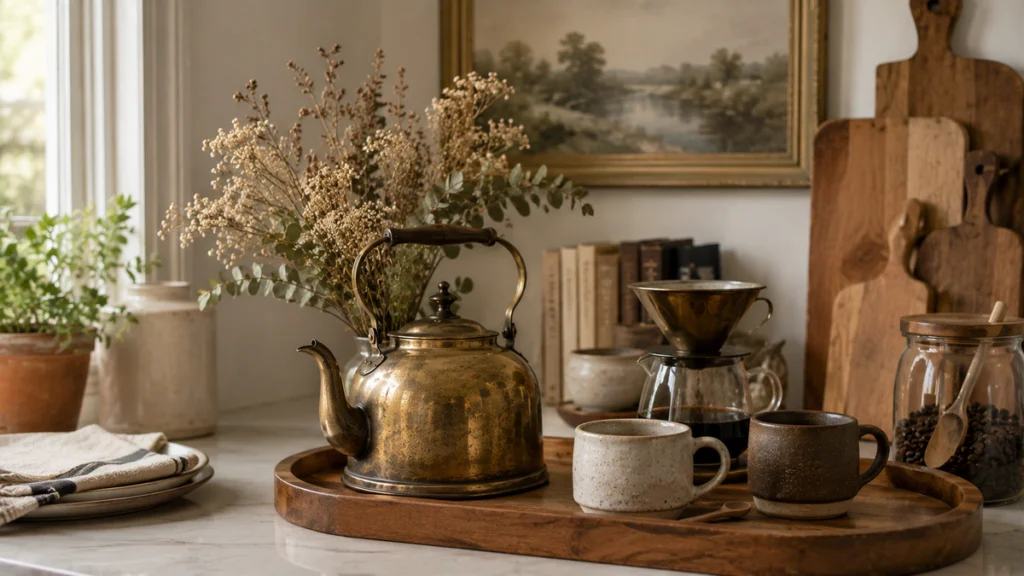
Care and Brass Kettle Safety Matter
The biggest weakness in many vintage brass kettles is not style. It is care and safety. Brass can tarnish, old seams can fail, and some older cookware may have unknown linings, solder, or residues. The FDA cookware safety warning notes that some imported cookware made from metals including brass may leach lead, so vintage pieces should be treated with care unless tested and confirmed safe.
That is why vintage brass kettles deserve a different standard from new cookware. Their beauty can be real while their safest role is still decorative.
For most homes, the better choice is simple: use vintage brass kettles as decor. If you want a functional kettle for boiling water, choose modern food-safe cookware from a trusted seller and keep the antique kettle for display.
Care rules are straightforward:
- Dust with a soft dry cloth before polishing.
- Test any cleaner on a hidden spot first.
- Avoid harsh abrasives that strip patina unevenly.
- Dry the kettle fully before storing it.
- Do not store tea, coffee, water, or acidic liquids inside an untested antique kettle.
Patina is not dirt by default. It is often the reason antique kitchen decor has depth. Clean for hygiene and stability, not to erase every mark.
Why They Fit Sustainable Decorating
Vintage brass kettles also fit the shift toward buying fewer, better, longer-lasting objects. A secondhand brass tea kettle or decorative teapot can keep an old piece in use as decor instead of sending it into storage or waste.
That does not mean every old kettle is a smart purchase. Sustainable decorating still needs judgment. Avoid pieces that are badly damaged, unsafe to handle, or so over-polished that the surface has lost its character.
The best vintage style is selective. One good kettle with a warm finish is stronger than a shelf full of random pieces that do not suit the room.
How to Choose the Right Vintage Brass Kettle
Start with the room, not the listing. A tall ornate kettle can suit a traditional kitchen, while a plain rounded kettle may look better in a modern cottage space. A copper tea kettle can bring a rosier tone, but brass gives a stronger golden accent.
Use these questions before buying vintage brass kettles:
- Does the color work with your cabinet hardware, faucet, or lighting?
- Is the size right for the shelf, island, or console?
- Is the listing clear about age, material, and condition?
- Does the seller show the inside, base, lid, and handle?
- Will you use it for display only, or do you need modern cookware?
Look closely at kettle features that show craft: an elegantly curved gooseneck spout, an iron bail handle, intricate floral engraving, a rustic hammered surface, silver-toned solder repairs, porcelain handle details, circa notes, or art deco lines. These details add charm, collector interest, character to any kitchen, and the timeless beauty people want from antique kitchen decor.
Some listings use very specific wording, such as vintage brass tea kettle, tea pot, made in India, 1.2L, tipping teapot, hinge, ceramic handle, graceful pour, or handcraft décor. Those phrases can be useful, but an elegant centerpiece still needs to be stable, affordable for its condition, and honest about whether it is decorative or usable.
If a listing promises serving tea from an old brass teapot, be cautious. A beautiful antique brass teapot, vintage brass teapot, or vintage tea showpiece can still be better as display than as drinkware.
Frequently Asked Questions
Are Vintage Brass Kettles Safe to Use?
Vintage brass kettles are safest as decorative pieces unless a qualified professional confirms that the interior is food-safe. Unknown linings, old solder, corrosion, and lead risk can make antique cookware unsuitable for boiling water or serving drinks.
How Can You Tell If a Brass Kettle Is Vintage?
Look for natural patina, older joinery, hand-finished details, uneven wear, maker marks, heavy brass weight, and signs of use around the handle, lid, and base. New vintage style brass pieces may look aged, but they often have more uniform finishes.
Should You Polish an Antique Brass Kettle?
Polish lightly only if the finish looks dull or dirty rather than beautifully aged. Over-polishing can remove character and reduce the soft tone that makes antique brass appealing.
Where Should You Display a Brass Kettle?
Display a brass kettle on open shelves, a coffee station, a dining console, a pantry shelf, or a mantel. Keep it away from damp areas and avoid placing it where the handle or spout can be knocked easily.
Are Vintage Brass Kettles Valuable?
Some are valuable, especially if they are old, well-made, rare, large, ornate, or linked to a known maker. Condition, provenance, material, and style all affect price more than age alone.
Final Thoughts
Vintage brass kettles are back in style because they do more than follow a decor trend. They bring antique kitchen decor, warm metal color, visible craftsmanship, and a useful reminder that vintage brass kettles need careful buying checks and brass kettle safety before they move from display to daily use.